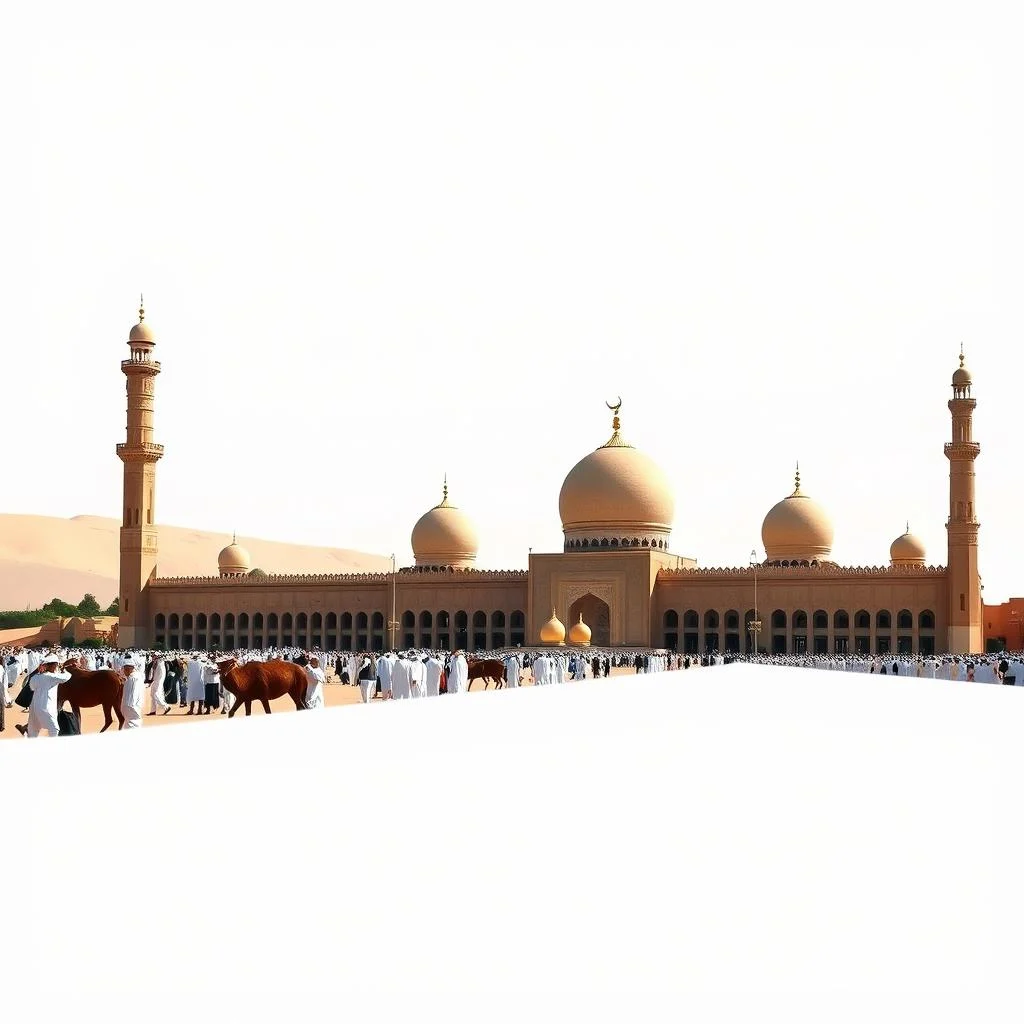
Millions of Muslims across the globe are preparing for one of Islam’s most sacred holidays: Eid al-Adha. This year, the festival falls in June 2026, marking a time of deep spiritual reflection, communal prayer, and acts of generosity. More than just a religious observance, Eid al-Adha is a powerful reminder of faith, sacrifice, and unity.
I’ve spent years covering Islamic holidays for communities from Karachi to Kuala Lumpur, and every time Eid al-Adha rolls around, I’m struck by its emotional weight. It’s not just about the ritual sacrifice—it’s about what that act represents: obedience to God, humility in the face of divine will, and a commitment to sharing with those less fortunate.
What Is Eid al-Adha?
Eid al-Adha, often called the “Festival of Sacrifice,” commemorates the story of Prophet Ibrahim (Abraham in Judeo-Christian tradition), who was willing to sacrifice his son Ismail as an act of obedience to Allah. At the last moment, Allah provided a ram to take Ismail’s place, affirming Ibrahim’s unwavering faith.
This story isn’t unique to Islam—it appears in Judaism and Christianity too—but in the Muslim world, it’s central to understanding the holiday’s significance. The word “Adha” comes from the Arabic root meaning “sacrifice,” and the festival lasts four days, beginning on the 10th day of Dhu al-Hijjah, the final month of the Islamic lunar calendar.
Unlike Eid al-Fitr, which marks the end of Ramadan, Eid al-Adha coincides with Hajj—the annual pilgrimage to Mecca. That’s why you’ll see heightened activity in Saudi Arabia during this period, with millions of pilgrims performing rites that mirror those of Prophet Ibrahim.
Eid al-Adha Date 2026: When Is It?
The exact date of Eid al-Adha changes every year because the Islamic calendar is lunar-based. In 2026, based on astronomical calculations and moon-sighting committees, Eid al-Adha is expected to begin on Saturday, June 6, 2026, and end on Wednesday, June 10, 2026.
Keep in mind that some countries rely on local moon sightings, so the date may shift by a day depending on your location. For example, Pakistan, India, and Bangladesh often announce their dates after confirmed sightings, while Saudi Arabia uses astronomical data. If you’re planning travel or family events, double-check with local religious authorities closer to the date.
For reference, here’s a quick look at upcoming years:
- Eid al-Adha 2025: Likely around May 31 – June 4, 2025
- Eid al-Adha 2026: June 6–10, 2026
- Eid al-Adha 2027: Projected for May 26–30, 2027
These dates are estimates based on the Umm al-Qura calendar used in Saudi Arabia. Always verify with your local mosque or Islamic center for official confirmation.
The Meaning Behind the Sacrifice
At first glance, the idea of animal sacrifice might seem jarring to outsiders. But within the context of Eid al-Adha, it’s not about violence—it’s about symbolism. The act represents surrendering one’s ego, desires, and attachments to God. It’s a physical manifestation of spiritual devotion.
In many Muslim-majority countries, families who can afford it purchase a sheep, goat, cow, or camel. The animal must be healthy and meet specific age requirements—usually at least one year old for sheep, two for goats, and five for cows or camels. Multiple families can share the cost and meat of a larger animal, which is encouraged in Islamic teachings.
After the ritual slaughter—performed by a trained individual following halal guidelines—the meat is divided into three equal parts: one-third for the family, one-third for relatives and friends, and one-third for the poor. This distribution ensures that no one is left out of the celebration, reinforcing the holiday’s emphasis on social equity.
Believe it or not, in cities like Lahore or Istanbul, you’ll find organized drives where NGOs and mosques coordinate the purchase and distribution of meat to low-income families. Last year, a single charity in Karachi distributed over 15,000 kg of meat during Eid al-Adha—enough to feed thousands of households.
How Is the Pronunciation Correct?
If you’ve ever hesitated saying “Eid al-Adha” at a community event, you’re not alone. The correct Eid al-Adha pronunciation is roughly “eed al-uhd-hah.” Break it down:
- “Eid” sounds like “eed” (as in “feed”)
- “al” is pronounced “al” (like “pal” without the ‘p’)
- “Adha” is “uhd-hah,” with a soft ‘d’ and a guttural ‘h’
Don’t stress too much—locals appreciate the effort, even if your accent isn’t perfect. What matters most is respect and intention.
Global Observances: From Karachi to Chicago
Eid al-Adha is celebrated in over 50 countries, but the traditions vary widely. In rural Pakistan, entire villages gather for communal prayers in open fields. In London, Muslims head to parks like Hyde Park or Trafalgar Square for large-scale Eid prayers organized by local mosques.
In the U.S., cities like Dearborn, Michigan—home to one of the largest Arab-American populations—host vibrant celebrations with food stalls, children’s activities, and interfaith dialogues. Meanwhile, in Indonesia, the world’s largest Muslim-majority nation, families visit gravesites to pray for deceased relatives before feasting together.
One thing remains constant: the sense of community. Whether you’re in Cairo, Casablanca, or Chicago, Eid al-Adha brings people together. Neighbors exchange sweets, children receive new clothes (often called “Eid clothes”), and extended families reunite after months apart.
Honestly, there’s nothing quite like walking through a neighborhood in Dhaka on Eid morning—the smell of biryani wafting from kitchens, the sound of takbeers (praises to Allah) echoing from loudspeakers, and the sight of men in white thobes heading to prayer grounds. It’s electric.
Economic Impact and Charitable Giving
Eid al-Adha isn’t just a spiritual event—it’s also an economic driver. In Pakistan alone, the livestock market sees a surge in demand weeks before the holiday. Farmers travel from remote areas to urban centers like Lahore and Karachi to sell their animals, often earning enough to cover annual expenses.
According to a 2023 report by the State Bank of Pakistan, Eid al-Adha generates over PKR 150 billion ($540 million) in livestock transactions annually. That’s a huge injection into the rural economy, supporting millions of livelihoods.
What’s more, Zakat and Sadaqah (obligatory and voluntary charity) peak during this time. Many Muslims fulfill their Qurbani (sacrifice) obligation through certified charities that ensure humane treatment and fair distribution. Organizations like Islamic Relief and Edhi Foundation operate nationwide networks to manage donations efficiently.
For those unable to afford an animal, digital platforms now allow online Qurbani bookings. You can select the type of animal, specify the region where it will be slaughtered, and even receive photos or videos of the process. It’s a modern twist on an ancient tradition.
Common Misconceptions About Eid al-Adha
Despite its global reach, Eid al-Adha is often misunderstood. Let’s clear up a few myths:
- Myth: Only wealthy people perform Qurbani.
Fact: While the sacrifice is recommended for those who can afford it, it’s not mandatory for everyone. Those below the Nisab threshold (the minimum wealth required for Zakat) are exempt. - Myth: The meat is only for Muslims.
Fact: Non-Muslims are welcome to receive and eat the meat. In fact, sharing food with neighbors of all faiths is encouraged. - Myth: Eid al-Adha is violent or cruel.
Fact: Islamic law mandates humane treatment. Animals must be well-fed, unstressed, and slaughtered swiftly with a sharp blade to minimize pain. Veterinarians often oversee large-scale operations.
The best part? These practices align with modern animal welfare standards. In fact, many halal slaughterhouses in Europe and North America follow strict EU and USDA guidelines.
How to Celebrate Respectfully as a Non-Muslim
If you’re not Muslim but want to honor your neighbors during Eid al-Adha, here’s how:
- Wish them “Eid Mubarak!” (Blessed Eid)—it means a lot.
- Avoid scheduling noisy activities early in the morning when prayers are held.
- If invited to a meal, bring a small gift like dates or sweets—traditional Eid treats.
- Ask questions respectfully. Most Muslims are happy to explain their traditions.
I remember one year in Toronto, my non-Muslim colleague brought homemade cookies to our office Eid party. Simple gesture, huge impact. It showed she cared—and that’s what bridges communities.
Eid al-Adha and Modern Challenges
Like any tradition, Eid al-Adha faces contemporary issues. Urbanization has made it harder for city dwellers to find space for animal sacrifice. In response, many cities now designate official “Qurbani zones” with proper waste management and veterinary oversight.
Environmental concerns are also rising. Improper disposal of animal remains can pollute waterways. That’s why organizations promote eco-friendly practices—like composting hides and using biodegradable packaging for meat distribution.
Then there’s the issue of commercialization. Some vendors inflate prices weeks before Eid, exploiting demand. Governments in Bangladesh and Pakistan have started cracking down on price gouging, setting maximum rates for livestock.
Despite these challenges, the core spirit of Eid al-Adha endures. It’s about sacrifice, yes—but also compassion, gratitude, and connection.
Personal Reflections: Why This Holiday Matters
As someone who’s covered religious festivals across Asia and the Middle East, I can tell you this: Eid al-Adha cuts through cultural noise. In a world obsessed with consumption, it asks us to give—not just money, but time, empathy, and presence.
I once interviewed a widow in Multan who received Qurbani meat for the first time after her husband passed away. “It wasn’t just food,” she told me. “It was dignity.” That moment stuck with me.
That’s the power of Eid al-Adha. It’s not performative. It’s personal. It’s raw. And in its simplicity, it offers profound lessons for everyone—Muslim or not.
Frequently Asked Questions
When is Eid al-Adha 2026?
Eid al-Adha 2026 is expected to begin on Saturday, June 6, 2026, and last four days, ending on Wednesday, June 10, 2026. Dates may vary slightly by region due to moon sighting differences.
What does Eid al-Adha mean?
Eid al-Adha means “Festival of Sacrifice.” It commemorates Prophet Ibrahim’s willingness to sacrifice his son Ismail as an act of obedience to God, and Allah’s provision of a ram in his place.
How do you pronounce Eid al-Adha?
The correct pronunciation is “eed al-uhd-hah.” “Eid” rhymes with “feed,” “al” sounds like “pal,” and “Adha” is pronounced with a soft ‘d’ and a guttural ‘h.’
Is Eid al-Adha the same date every year?
No. Because the Islamic calendar is lunar, Eid al-Adha shifts approximately 10–12 days earlier each Gregorian year. For example, Eid al-Adha 2025 will likely fall in late May, while Eid al-Adha 2027 is projected for late May 2027.
Can non-Muslims participate in Eid al-Adha?
Absolutely. While the religious rites are for Muslims, non-Muslims are welcome to join celebrations, share meals, and learn about the traditions. Many mosques host open houses during Eid.
As we approach Eid al-Adha 2026, let’s remember its timeless message: that true faith isn’t measured by words alone, but by actions—by what we give, whom we include, and how we treat the vulnerable.
Whether you’re performing Qurbani in Lahore, attending prayer in London, or simply sending a kind message to a Muslim friend, you’re part of a global story of sacrifice and solidarity.
And if you’re looking for ways to get involved beyond the holiday, consider supporting local food drives or volunteering with organizations that assist low-income families. After all, the spirit of Eid al-Adha doesn’t end when the feast does.
For more insights on community events and cultural observances in Pakistan, check out our guide on 8171 Web Portal 2026: Fast CNIC Check & Payment Status Guide for BISP Beneficiaries. If you’re interested in seasonal job opportunities during festive periods, explore Pakistan Army Jobs In Karachi 2026 – Gardener & Mess Waiter. And for those planning home renovations before hosting Eid gatherings, don’t miss our tips in Small Guest Bathroom Makeover: Budget-Friendly, Big-Impact Refresh for Beginners.