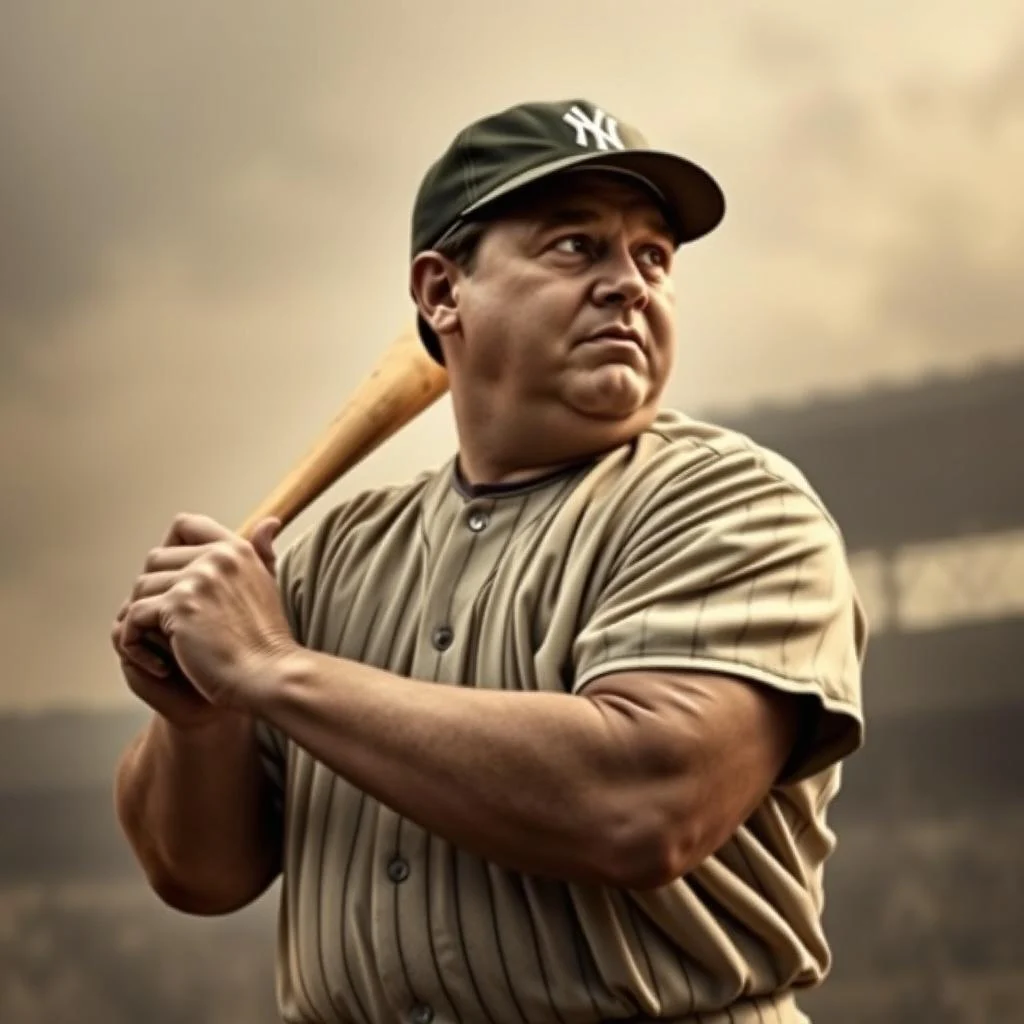
You can’t talk about baseball without mentioning Babe Ruth. He didn’t just play the game—he rewrote it. From a troubled kid in Baltimore to the Sultan of Swat, Ruth’s journey is one of the most compelling in sports history. I’ve spent years studying his career, and honestly, every time I revisit his stats or hold a replica of his signature swing, I’m struck by how much he shaped not just baseball, but American culture.
Born George Herman Ruth Jr. in 1895, he grew up in a working-class neighborhood near Baltimore’s waterfront. His parents ran a saloon, and young George was often left to his own devices. By age seven, he was sent to St. Mary’s Industrial School for Boys, a reformatory and orphanage run by the Xaverian Brothers. That’s where his love for baseball began—and where a priest named Brother Matthias spotted his raw talent.
Ruth wasn’t just good. He was different. At 19, he signed with the Boston Red Sox and quickly became a dominant left-handed pitcher. But it was his bat that would change everything.
From Pitcher to Powerhouse: The Birth of a Legend
When Ruth first joined the Red Sox in 1914, he was known for his pitching. In 1916, he threw a complete-game shutout in Game 2 of the World Series against the Brooklyn Robins. He finished the season with a 1.75 ERA and 23 wins. But even then, people whispered about his hitting. In 1919, he smashed 29 home runs—more than any other team in the American League that year.
That season, the Red Sox traded him to the New York Yankees. The deal, infamously involving a loan from owner Harry Frazee to fund a Broadway play, became known as “The Curse of the Bambino.” Boston wouldn’t win another World Series until 2004.
With the Yankees, Ruth transitioned fully to the outfield. He stopped pitching and focused on hitting. And boy, did he hit.
Babe Ruth Stats: Numbers That Still Shock
Let’s talk numbers. Ruth’s career stats aren’t just impressive—they’re borderline mythical.
- 714 home runs – a record that stood for 39 years until Hank Aaron broke it in 1974.
- .342 career batting average – elite even by today’s standards.
- 2,214 RBIs – second all-time behind Hank Aaron.
- 2,062 walks – a testament to his plate discipline and fear factor.
- 1.164 career OPS – the highest in MLB history. Yes, higher than Barry Bonds.
In 1927, he hit 60 home runs in a single season. That record stood until Roger Maris hit 61 in 1961. Even today, only a handful of players have come close. The best part? Ruth did it without modern training, nutrition, or video analysis.
He played in an era when gloves were smaller, fields were rougher, and travel meant trains, not jets. And yet, he dominated.
The Babe Ruth Diet: Beer, Steak, and… Pancakes?
You might think a player with Ruth’s physique—6’2”, 215 pounds in his prime—ate like a health nut. Nope. His diet was… unconventional.
Stories abound of Ruth starting his day with a stack of pancakes, a dozen oysters, and a few beers. He loved steak, especially after games. One famous tale tells of him eating an entire steak dinner, then ordering another “for the road” before heading out to a nightclub.
He wasn’t exactly a fitness guru. He smoked cigars, drank heavily, and slept late. But somehow, his body responded. His power came from natural strength, quick hands, and an uncanny ability to time pitches.
Doctors today would cringe at his lifestyle. But back then, Ruth’s diet was part of his myth. Fans admired his larger-than-life persona—the carousing, the generosity, the appetite for life. He wasn’t just a player; he was a character.
Still, his habits caught up with him. In 1946, he was diagnosed with nasopharyngeal carcinoma, a rare cancer. He died in 1948 at age 53. His death shocked the nation. Thousands lined the streets of New York to pay their respects.
Babe Ruth Ethnicity: The Irish-German Roots of a Baseball Icon
Ruth’s background is often overlooked, but it’s key to understanding his identity. He was of Irish and German descent. His father, George Herman Ruth Sr., was the son of German immigrants. His mother, Kate Schamberger, was of Irish heritage.
Growing up in a predominantly immigrant neighborhood, Ruth learned early about hardship and resilience. His parents struggled to make ends meet, and young George often worked odd jobs to help support the family.
This working-class upbringing shaped his personality. He was loud, emotional, and deeply loyal to those who stood by him. He gave away money to kids, visited hospitals, and signed autographs until his hand cramped.
His ethnicity also played a role in how he was perceived. In the early 20th century, Irish and German Americans were still fighting for full acceptance in U.S. society. Ruth’s success helped break down barriers. He became a symbol of the American dream—proof that talent and grit could overcome background.
The Babe Ruth Signed Baseball: A Piece of History
If you’ve ever held a Babe Ruth signed baseball, you know the weight it carries. These aren’t just collectibles—they’re artifacts.
Authentic Ruth signatures are rare. He didn’t sign many balls during his lifetime, and those that exist are highly prized. In 2022, a game-used baseball signed by Ruth sold at auction for over $1.5 million. Another, signed during his 1927 season, fetched $717,000.
What makes them so valuable? Provenance. A signed ball with documentation—photos, letters, or witness accounts—is worth far more than one without. Collectors look for balls signed at specific events, like the 1932 World Series or his farewell tour in 1935.
But beware of fakes. The market is flooded with forgeries. Experts use ink analysis, paper aging, and handwriting comparison to verify authenticity. If you’re buying, always go through a reputable auction house or certified dealer.
I once met a collector who owned a Ruth-signed ball from 1923. He told me it was signed at Yankee Stadium during a charity event. The story, the patina on the leather, the slight smudge on the “R”—it all added to the magic. That’s the power of a genuine piece of history.
The Babe Ruth Baseball Card: From Tobacco to Treasure
Baseball cards weren’t always valuable. In Ruth’s era, they were giveaways—inserted in cigarette packs to stiffen the packaging.
The most famous Babe Ruth baseball card is the 1916 M101-5 Sporting News card. Only a handful are known to exist in mint condition. In 2021, one graded PSA 8 sold for $3.1 million—the highest price ever paid for a baseball card at the time.
Then there’s the 1933 Goudey card. It features Ruth in a Yankees uniform, mid-swing. Over 200 were printed, but high-grade versions are scarce. A PSA 9 sold for $900,000 in 2020.
What drives the value? Rarity, condition, and historical significance. Ruth was one of the first players to have a card, and his image helped popularize the hobby.
Kids in the 1930s didn’t just collect cards—they traded them, studied them, dreamed of meeting the Bambino. That nostalgia still fuels the market today.
Modern collectors often focus on rookie cards. Ruth’s 1916 card is considered his rookie, though he didn’t appear on a mainstream card until 1933. The gap reflects how the hobby evolved—from tobacco promotions to a billion-dollar industry.
Babe Ruth Candy: The Sweet Side of the Sultan
Believe it or not, Babe Ruth had his own candy bar. Introduced in 1921 by the George H. Ruth Candy Company, the Babe Ruth bar was a mix of peanuts, caramel, and chocolate-covered nougat.
It wasn’t named after him at first—originally called the “Ruth Supreme,” it was rebranded in his honor after he joined the Yankees. The name stuck, and the candy became a hit.
Today, the Babe Ruth bar is still sold by Nestlé. It’s not as popular as Snickers or Milky Way, but it has a loyal following. Collectors seek vintage wrappers, especially from the 1930s and 1940s.
The candy’s legacy is a reminder of Ruth’s cultural impact. He wasn’t just a player—he was a brand. Companies wanted his name on their products because he represented strength, fun, and Americana.
Ironically, Ruth himself wasn’t a big candy fan. He preferred steak and beer. But he understood the value of his image. He licensed his name carefully, ensuring it stayed tied to quality and excitement.
The Babe Ruth Movie: Hollywood’s Take on the Legend
Ruth’s life has inspired several films, but none capture his essence quite like The Babe (1992), starring John Goodman.
The movie follows Ruth from his childhood at St. Mary’s to his final days. It’s not a documentary—it takes liberties with the timeline and some events—but it gets the spirit right.
Goodman’s portrayal is larger than life, just like the man himself. He captures Ruth’s humor, his temper, and his deep love for the game. The film shows his relationship with his wife Claire, his rivalry with teammate Lou Gehrig, and his struggle with fame.
One scene stands out: Ruth visiting a children’s hospital and hitting a home run for a sick boy. It’s probably apocryphal, but it reflects the real Ruth’s generosity. He often visited hospitals, signed autographs for kids, and donated money to charities.
Other films, like The Sandlot (1993), reference Ruth as a mythic figure. In one scene, the boys imagine him rising from the grave to play ball. That’s how he lives on—not just in records, but in stories.
Documentaries like Babe Ruth: The Great Bambino (2005) offer a more factual look. They use archival footage, interviews, and expert analysis to explore his career and legacy.
What’s clear from all these portrayals? Ruth was more than a player. He was a symbol—of hope, of power, of the American dream.
Why Babe Ruth Still Matters in 2026
You might wonder: why talk about a player who retired nearly 90 years ago?
Because his impact hasn’t faded. Modern players still chase his records. Analysts compare Mike Trout’s OPS to Ruth’s. Fans debate whether anyone will ever match his 60-home-run season.
More than that, Ruth changed how we see sports. He was the first true sports celebrity. His image was everywhere—on cards, candy, movies, and newspapers. He proved that athletes could be stars.
He also helped integrate baseball—not by playing with Black athletes, but by using his fame to support them. In 1934, he played in exhibition games against Negro League stars like Satchel Paige and Josh Gibson. He praised their talent publicly, helping build respect for the Negro Leagues.
His legacy extends beyond the field. The Babe Ruth League, founded in 1951, still operates youth baseball programs across the U.S. Thousands of kids play under his name every summer.
And his stats? They’re not just numbers. They’re benchmarks. When Aaron Judge hit 62 home runs in 2022, the world compared him to Ruth. When Shohei Ohtani dominates as both pitcher and hitter, people say he’s the closest thing to Ruth since Ruth.
Collecting Babe Ruth Memorabilia: What to Know
If you’re thinking about collecting Babe Ruth items, here’s what you need to know.
Start with research. Learn the difference between game-used and promotional items. A bat used in a World Series is worth more than one used in practice.
Look for provenance. A letter from Ruth’s estate, a photo of him signing the item, or a receipt from a 1920s auction adds value.
Be cautious online. eBay and social media are full of fakes. Always ask for third-party authentication from companies like PSA, JSA, or Beckett.
Common items include:
- Signed baseballs
- Photographs
- Jerseys (rare and expensive)
- Programs from games he played in
- Ticket stubs from historic games
I once bought a 1927 World Series program on a whim. It wasn’t signed, but it had Ruth’s name in the lineup. Years later, I found a photo of him signing autographs near that very gate. The connection made it priceless to me.
Collecting isn’t just about value. It’s about connection—to a time when baseball was simpler, louder, and more human.
Babe Ruth’s Final Years and Legacy
Ruth’s last years were bittersweet. He managed the Brooklyn Dodgers briefly in 1938 but was fired after one season. He hoped to manage the Yankees but was never offered the job—partly due to his health, partly due to his reputation.
He stayed involved in baseball, appearing at games and charity events. In 1946, he was diagnosed with cancer. He underwent experimental treatments, including radiation, but his health declined rapidly.
He died on August 16, 1948, at his home in New York. Over 100,000 people passed by his casket at Yankee Stadium. The outfield flag flew at half-mast.
His legacy lives on. The Babe Ruth Birthplace Museum in Baltimore preserves his childhood home. Yankee Stadium’s Monument Park honors him with a plaque.
And every time a player steps up to the plate, swings for the fences, and hears the crowd roar—Ruth’s spirit is there.
Frequently Asked Questions
What was Babe Ruth’s real name?
His full name was George Herman Ruth Jr. He was nicknamed “Babe” by a teammate during his minor league days because he was the youngest player on the team.
How many home runs did Babe Ruth hit in his career?
He hit 714 home runs, a record that stood until Hank Aaron surpassed it in 1974. His single-season record of 60 home runs in 1927 lasted until 1961.
Was Babe Ruth ever in the military?
Yes. During World War I, he served in the U.S. Navy as a physical instructor. He didn’t see combat, but he used his fame to boost morale and promote war bonds.
What caused Babe Ruth’s death?
He died of nasopharyngeal carcinoma, a rare cancer of the nasal cavity and throat. His heavy smoking and drinking likely contributed to the disease.
Are Babe Ruth signed baseballs real?
Yes, but they’re extremely rare and valuable. Authentic ones can sell for hundreds of thousands of dollars. Always verify through a certified authentication service.
Ruth’s story isn’t just about baseball. It’s about ambition, redemption, and the power of a single swing. He came from nothing and became everything. And in 2026, as new stars rise and records fall, his name still echoes through the stands.
Whether you’re holding a Babe Ruth signed baseball, flipping through a vintage baseball card, or watching a highlight reel of his 60th home run, you’re touching a piece of history. And that’s something no algorithm can replicate.
For more insights into legendary figures and cultural icons, check out these related reads:
- National Defence University NDU Jobs In Islamabad 2026 – Multiple Management & Support Roles
- Modern Small Guest Bathroom Styling Tips: Fresh, Space-Smart Ideas for a Chic Guest Bath
- The Hottest 2026 Bedroom Trends You Need to Know