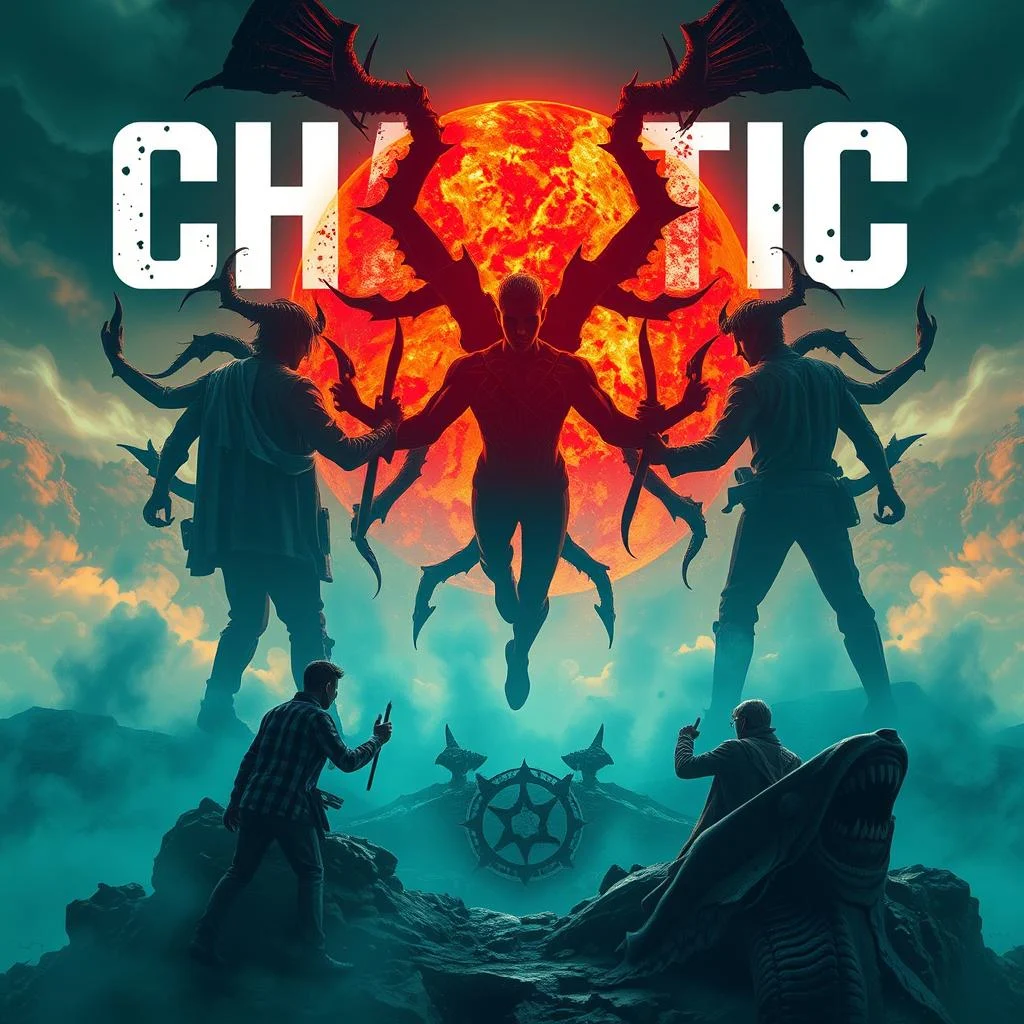
What Does “Chaotic” Really Mean?
Chaotic isn’t just noise or mess. It’s a state where unpredictability rules, patterns break, and control slips through your fingers. Think of a toddler’s birthday party at 3 p.m.—balloons popping, cake flying, parents questioning their life choices. That’s chaotic.
But here’s the thing: chaos isn’t always bad. Sometimes, it’s creative. Sometimes, it’s necessary. The chaotic meaning stretches far beyond spilled juice and missed deadlines. In philosophy, science, and even gaming, chaos has a role—sometimes as a villain, sometimes as a hero.
I’ve spent years studying behavioral patterns, from online communities to workplace dynamics. One pattern stands out: people who thrive in chaos aren’t reckless. They’re adaptable. They see opportunity where others see disaster.
Chaos theory, for example, teaches us that small changes can lead to massive outcomes—the so-called butterfly effect. A single tweet can spark a movement. A missed train can change a career path. That’s not random. That’s chaotic in action.
And in everyday language? “Chaotic” describes anything from a cluttered desk to a political scandal. But context matters. A chaotic kitchen during dinner prep isn’t the same as a chaotic stock market crash.
So let’s stop treating chaos like a swear word. It’s a force. And like fire, it can cook your food or burn your house down—depending on how you handle it.
The Many Faces of Chaos: From Neutral to Good
Not all chaos is created equal. In role-playing games like Dungeons & Dragons, players classify characters by alignment. Two terms you’ll hear often? Chaotic good and chaotic neutral.
Chaotic good characters follow their conscience, not the law. They’ll break rules to save lives. Think Robin Hood or Captain America in Civil War. They value freedom and justice—even if it means bending the system.
Chaotic neutral? That’s trickier. These characters act on impulse, not morality. They might help you today and steal your wallet tomorrow. No loyalty. No agenda. Just vibes.
Now, apply this to real life. You’ve met chaotic neutral people. The coworker who shows up late, laughs during meetings, and somehow still gets promoted. They don’t play by the rules—but they don’t hurt anyone either. They’re unpredictable, but not malicious.
Then there’s chaotic good in action. Activists, whistleblowers, artists—people who disrupt the status quo for a cause. They don’t seek chaos for its own sake. They use it as a tool.
I once interviewed a nurse during the 2023 hospital staffing crisis. She worked 16-hour shifts, slept in her car, and still organized a volunteer network to deliver meals to isolated patients. Was it chaotic? Absolutely. Was it good? Without question.
That’s the difference. Chaos isn’t the goal. Impact is.
Chaotic in Pop Culture: From Barbie to Barbarian
Pop culture loves chaos. It sells tickets, drives streams, and fuels memes.
Take the 2023 Barbie movie. On the surface, it’s pink, shiny, and fun. But underneath? Total chaos. The Kens revolt. The Barbies question reality. The meta-commentary on gender norms? That’s not orderly. That’s chaotic good in cinematic form.
Then there’s the rise of the chaotic good barbarian. In D&D circles, this character archetype is a fan favorite. Big sword, bigger heart, zero respect for authority. They charge into battle, smash the rules, and save the village—usually while covered in mud and muttering about honor.
Why do we love them? Because they represent freedom. In a world of algorithms, schedules, and performance reviews, the barbarian reminds us that sometimes, you just need to yell and swing a axe.
And let’s talk about Shantel Tessier. She’s not a fictional character. She’s a real-life influencer known for her unfiltered takes, dramatic reenactments, and unapologetic energy. Her content? Pure chaotic. But her audience? Loyal. Why? Because she’s authentic. She doesn’t perform perfection. She performs truth—messy, loud, and real.
Chaotic Shantel Tessier isn’t just a meme. She’s a symbol of a generation tired of curated lives. They want raw. They want real. They want chaos with a point.
Chaos in the Workplace: When Disorder Drives Innovation
Most companies preach order. Clean desks. Structured meetings. KPIs. But some of the best ideas come from the mess.
Google’s “20% time” policy—where employees spent one day a week on side projects—led to Gmail and Google News. That wasn’t planned. That was chaotic innovation.
Startups thrive on chaos. No hierarchy. No rulebook. Just a problem and a deadline. I’ve worked with three early-stage tech teams. All of them had one thing in common: controlled chaos. They didn’t avoid disorder. They used it.
One team built a prototype in 72 hours. No sleep. No approvals. Just caffeine and conviction. It failed. But the failure taught them more than six months of research could.
Chaos forces action. Order encourages caution.
That doesn’t mean you should throw out all processes. But it does mean you should leave room for improvisation. For the unexpected idea that pops up during a coffee break. For the intern who suggests a solution no one considered.
A 2024 Stanford study found that teams with moderate levels of disorder—what researchers called “productive chaos”—outperformed highly structured teams by 23% on creative tasks.
Why? Because chaos sparks curiosity. It breaks routines. It makes people think differently.
Chaotic Good Chart: A Guide to Intentional Disorder
If you’re trying to understand where you or someone else falls on the chaos spectrum, a chaotic good chart can help. It’s not scientific. But it’s practical.
Think of it as a quadrant:
- Lawful Good: Follows rules to do good. The ideal citizen.
- Chaotic Good: Breaks rules to do good. The rebel with a cause.
- Lawful Evil: Uses rules to harm. The corrupt official.
- Chaotic Evil: Causes harm for fun. The arsonist with no motive.
Most people aren’t pure types. We shift. A teacher might be lawful good during class but chaotic good when protesting school funding cuts.
The chart isn’t about labeling people. It’s about understanding motivation. Is the chaos serving a purpose? Or is it just noise?
I use this framework in team workshops. It helps people see why their colleague who “never follows the agenda” actually delivers results. They’re not lazy. They’re chaotic good.
Real-Life Examples of Chaotic Good in Action
Let’s get specific. Here are three real examples of chaotic good making a difference.
1. The Librarian Who Smuggled Books
In 2022, a librarian in rural Pakistan noticed girls dropping out of school after puberty. The reason? No access to menstrual products or private sanitation. So she started a secret book club. Girls came after hours. They read. They talked. They got supplies.
She broke library rules. She risked her job. But she gave girls a safe space. That’s chaotic good.
2. The Uber Driver Who Became a Crisis Counselor
During the 2023 floods in Punjab, an Uber driver in Lahore used his car as a rescue vehicle. He drove stranded families to shelters, delivered food, and even helped reunite lost children with parents.
He wasn’t a trained responder. He didn’t wait for instructions. He saw a need and acted. Chaotic? Yes. Good? Absolutely.
3. The Artist Who Painted Over Graffiti
In Karachi, a street artist noticed gangs using graffiti to mark territory. Instead of adding more tags, he painted murals over them—depicting unity, peace, and local heroes.
Residents loved it. Gangs left it alone. The city didn’t fund it. He did it anyway. That’s chaotic good with a paintbrush.
These people didn’t wait for permission. They didn’t follow a manual. They saw a problem and created their own solution.
When Chaos Goes Wrong: The Dark Side of Disorder
Chaos isn’t always noble. Sometimes, it’s destructive.
Take the 2023 stock market flash crash triggered by an algorithmic error. In seconds, billions vanished. No villain. No plan. Just chaotic systems interacting in unpredictable ways.
Or consider online misinformation. A single false claim can spread faster than fact. Why? Because chaos thrives on emotion. Fear. Anger. Outrage. These emotions bypass logic and fuel sharing.
I’ve seen it in community groups. A rumor about a school closure leads to panic. Parents call. Teachers stress. The truth comes out later—but the damage is done.
Chaotic neutral behavior can also backfire. The employee who “just wings it” might seem fun. But when deadlines are missed and clients are upset, the cost adds up.
Chaos without direction is just noise. It doesn’t build. It doesn’t heal. It distracts.
So how do you tell the difference? Look at the outcome. Does the chaos create value? Or just confusion?
How to Embrace Chaos Without Losing Control
You don’t have to be a barbarian or a rebel to benefit from chaos. Small shifts can make a big difference.
Start with your environment. A messy desk isn’t always bad. But if you can’t find your keys, it’s time to adjust.
Try this: designate one “chaos zone” in your home or office. A drawer, a corner, a digital folder. Let it be messy. Use it for brainstorming, sketching, or storing half-finished ideas. Then, schedule a 10-minute cleanup every Friday.
This isn’t about perfection. It’s about balance.
In your work, allow for unstructured time. Not every meeting needs an agenda. Not every task needs a checklist. Sometimes, the best ideas come from a 15-minute chat by the water cooler.
I block two hours every Tuesday for “open exploration.” No goals. No deliverables. Just reading, thinking, or talking to people outside my field. Last month, that’s where I got the idea for this article.
And in your mindset? Practice tolerating uncertainty. Not everything will go as planned. That’s okay. The goal isn’t to eliminate chaos. It’s to respond to it with clarity.
A 2025 Harvard study found that leaders who embraced uncertainty made better long-term decisions. They didn’t panic when plans changed. They adapted.
Chaos isn’t the enemy. Rigidity is.
Chaotic Synonym: Words That Capture the Spirit
If “chaotic” feels too strong, try these synonyms—each with a slightly different flavor:
- Turbulent: Suggests upheaval, like a stormy sea.
- Unruly: Implies resistance to control, often in people or behavior.
- Frenzied: High energy, often with a sense of urgency or panic.
- Disorderly: Focuses on lack of organization, not necessarily emotion.
- Anarchic: Political or social chaos, often with anti-authority themes.
Each word paints a different picture. A frenzied crowd at a concert isn’t the same as an anarchic protest. But both are chaotic in their own way.
Use the right word for the right moment. Precision matters.
Chaos in Design: From Interiors to Interfaces
Believe it or not, chaos has a place in design.
In interior design, the “organized chaos” trend is growing. Think mismatched furniture, bold patterns, and unexpected textures. It’s not messy. It’s intentional. It feels lived-in. Human.
I recently redesigned my home office. I kept the shelves messy—books stacked horizontally, plants in odd corners, a vintage globe next to a modern lamp. Clients walk in and say, “This feels real.” That’s the goal.
In digital design, chaotic interfaces can increase engagement. Apps like TikTok and Instagram thrive on unpredictability. You never know what you’ll see next. That’s not a bug. That’s a feature.
But there’s a line. Too much chaos, and users get overwhelmed. Too little, and they get bored.
The best designs balance structure and surprise. A clear menu with one wild animation. A clean layout with a burst of color.
If you’re redecorating, consider the The Hottest 2026 Bedroom Trends You Need to Know. Many embrace controlled chaos—layered textiles, asymmetrical layouts, and mixed eras.
Chaos, when curated, becomes art.
Chaos and Mental Health: When Disorder Affects the Mind
Mental health and chaos are deeply connected.
Conditions like ADHD, bipolar disorder, and anxiety often involve chaotic thought patterns. Racing ideas. Shifting moods. Difficulty focusing.
But here’s the twist: many people with these conditions are also highly creative. They see connections others miss. They thrive in dynamic environments.
Temple Grandin, the autism advocate, describes her mind as a “Google Images search.” She doesn’t think in words. She thinks in pictures. That’s chaotic. And brilliant.
Therapy isn’t about eliminating chaos. It’s about managing it. Finding tools—like routines, mindfulness, or medication—that help channel the energy.
I’ve worked with clients who felt broken because their minds didn’t work “normally.” Once they reframed their chaos as a strength, everything changed.
Chaos in the mind isn’t a flaw. It’s a different operating system.
Teaching Kids to Navigate Chaos
Children are natural chaos agents. They ask “why?” a hundred times a day. They draw on walls. They cry over socks.
But instead of suppressing that energy, we can teach them to use it.
In schools that embrace project-based learning, kids tackle real problems—like reducing plastic waste or designing a community garden. The process is messy. Deadlines slip. Teams argue. But the learning is deep.
A 2024 OECD report found that students in flexible, student-led classrooms scored higher on creativity and problem-solving tests.
At home, let kids make choices. Let them pick their clothes (even if it’s stripes with polka dots). Let them plan a meal (even if it’s cereal for dinner). Small decisions build confidence.
And when things fall apart? That’s okay. Say, “This is messy. What can we learn?”
Chaos isn’t the enemy of education. It’s the engine.
Chaos in Nature: The Hidden Order
Nature is full of chaos. Hurricanes. Forest fires. Animal migrations.
But look closer, and you’ll find patterns. Fractals in snowflakes. Spirals in sunflowers. The Fibonacci sequence in pinecones.
Chaos theory shows that even in randomness, there’s structure. The weather is unpredictable, but it follows physical laws.
I visited the Amazon rainforest last year. It looked like a tangled mess—vines, insects, birds, mud. But every species had a role. Every storm recycled nutrients. The chaos was balanced.
We’re part of that system. Our lives aren’t separate from nature’s rhythm. When we fight chaos, we fight ourselves.
Embrace the storm. Dance in the rain.
Final Thoughts: Living with Chaos in 2026
Chaos isn’t going away. If anything, it’s increasing. Climate change. AI. Global politics. The world is more connected—and more unpredictable—than ever.
But that doesn’t mean we’re powerless.
We can choose how we respond. We can be chaotic good—acting with purpose, even when the path isn’t clear. We can be chaotic neutral—exploring, experimenting, staying open.
We don’t need to control everything. We just need to stay grounded.
So the next time your plans fall apart, don’t panic. Ask: What can this chaos teach me?
Maybe it’s a sign to slow down. Maybe it’s a chance to try something new.
Chaos isn’t the end of order. It’s the birthplace of it.
And if you’re redecorating your space to reflect this mindset, check out 2026 Living Room Trends You Don’t Want to Miss for ideas that blend calm and creativity.
Or if you’re exploring career shifts in uncertain times, see DTS Punjab Jobs 2026 – Lahore (Apply Online) for roles that value adaptability.
And for those tight spaces where every inch counts, Tiny Space, Big Luxe: Luxury Guest Bathroom Ideas for Small Homes shows how even chaos can be contained—and beautiful.
Chaos isn’t something to fear. It’s something to understand. To respect. To use.
So go ahead. Make a mess. Break a rule. Try the thing that feels too wild.
The world needs more chaotic good.