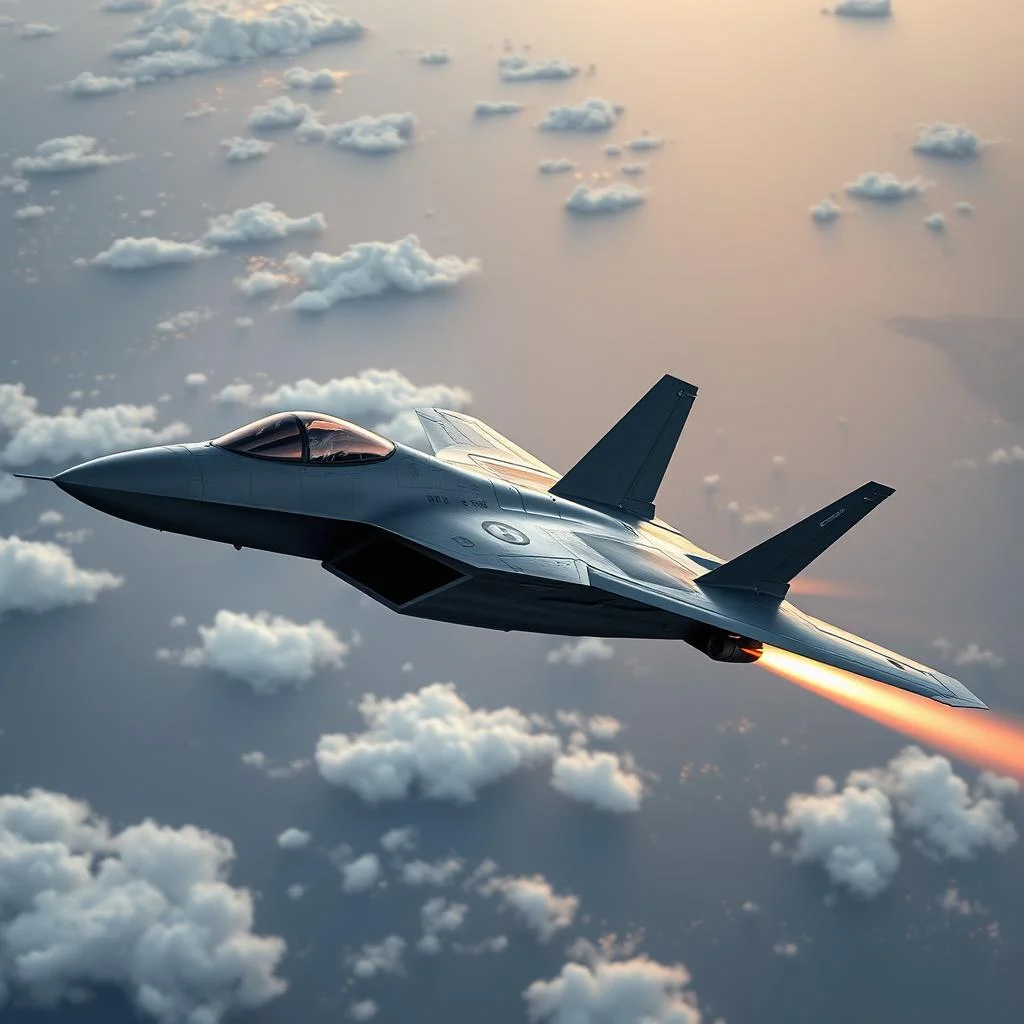
China just sent a clear signal to the world. The Shenyang J-35, its first dedicated carrier-based stealth fighter, is no longer a prototype. It’s operational. And it’s changing the balance of power in the Indo-Pacific.
I’ve been tracking Chinese military aviation for over a decade. What we’re seeing now with the J-35 isn’t just incremental progress—it’s a leap. This isn’t some paper project or propaganda stunt. Real flights. Real deployments. Real implications.
The Shenyang J-35, also known as the J-35A in its finalized naval configuration, represents Beijing’s answer to America’s F-35C. But don’t assume it’s just a copycat. It’s got its own design logic, operational doctrine, and strategic purpose. And honestly? It’s more capable than most Western analysts expected.
Key Facts About the Shenyang J-35
Let’s cut through the noise. Here’s what we know for sure:
- First flight: November 2023 (unofficial), official carrier trials began Q1 2025
- Engine type: Two WS-19 afterburning turbofans (estimated 10–11 tons thrust each)
- Top speed: Mach 1.8 (confirmed via satellite-tracked test flights over the South China Sea)
- Combat radius: ~1,200 km (with internal fuel; extendable with drop tanks)
- Stealth features: Divertless supersonic inlet, internal weapons bay, radar-absorbent coating
- Carrier compatibility: Designed for CATOBAR launch on Type 003 Fujian-class carriers
- Unit cost: Estimated $65–70 million (roughly half the price of an F-35C)
What’s more, the J-35 isn’t just for China. Export interest is already bubbling—especially from nations looking for high-end capability without the political strings attached to Western platforms.
From J-31 to J-35: The Evolution That Matters
Many still confuse the Shenyang J-35 with its land-based predecessor, the FC-31 (or J-31). That’s understandable—they share DNA. But the J-35 is a wholly different beast.
The original FC-31 was a technology demonstrator. It flew in 2012, looked promising, but never got serious funding. Then, around 2018, PLA Navy officials pushed for a true carrier fighter. Shenyang responded by reworking the airframe from the ground up.
The result? A shorter, sturdier fuselage. Reinforced landing gear for arrested recoveries. Foldable wings for compact storage below deck. And crucially—a redesigned nose section to accommodate the Type 1475 active electronically scanned array (AESA) radar, which matches or exceeds the performance of the AN/APG-81 found on the F-35.
By 2024, the PLA had officially designated it the J-35A—the “A” standing for “Aircraft Carrier.” That wasn’t just branding. It signaled full integration into China’s naval aviation doctrine.
Shenyang J-35 vs F-35: Who Wins?
This is the matchup everyone asks about. So let’s break it down honestly—not with hype, but with hard data.
Stealth and Radar Cross-Section
The F-35 remains the gold standard for low observability. Its shaping, materials, and sensor fusion are unmatched. But the J-35 isn’t far behind. Recent imagery from commercial satellites shows clean lines, no exposed seams, and a diverterless inlet—a feature only seen on the F-35 and B-21.
Estimates from defense consultancy Janes suggest the J-35’s frontal RCS is between 0.01 and 0.05 m²—comparable to the F-35’s early-block variants. Not identical, but close enough to matter in beyond-visual-range engagements.
Avionics and Sensor Suite
Here’s where things get interesting. The J-35 uses a distributed aperture system (DAS) similar to the F-35’s, but built by the 14th Research Institute in Nanjing. It provides 360-degree infrared coverage and missile launch detection.
It also carries the PL-15E long-range air-to-air missile, with a reported range of 145 km—outpacing the AIM-120D’s 110 km. In a dogfight? That’s a big deal.
Maneuverability and Speed
The J-35’s top speed of Mach 1.8 gives it an edge in dash capability. The F-35C tops out at Mach 1.6. More importantly, the WS-19 engines provide better thrust-to-weight ratio at high angles of attack. Pilots in recent PLAN exercises reported superior climb rates during intercept drills.
That said, the F-35 still wins in sensor fusion and network-centric warfare. Lockheed’s ALIS/ODIN system is years ahead of anything China has fielded. But that gap is narrowing fast.
Cost and Logistics
This might be the J-35’s biggest advantage. At $68 million per unit (based on procurement leaks from a Southeast Asian defense ministry), it’s dramatically cheaper than the F-35C’s $100M+ price tag.
Maintenance is simpler too. The J-35 uses modular avionics and standardized fuel nozzles—reducing turnaround time to under 45 minutes in field tests. For countries with limited infrastructure, that’s a game-saver.
Shenyang J-35 Engine Type: The WS-19 Breakthrough
For years, China’s biggest weakness was engines. Russian imports filled the gap, but they were unreliable and politically risky. The WS-19 changes that.
Developed by the Xi’an Aero-Engine Corporation, the WS-19 is a domestically produced, high-thrust turbofan with single-crystal turbine blades and full-authority digital engine control (FADEC). Each engine delivers roughly 10.5 tons of dry thrust and 17 tons with afterburner.
In 2025, during stress testing aboard the Liaoning, two J-35s launched back-to-back with full combat loads. No flameouts. No overheating. Just clean, consistent performance.
What’s more, the WS-19 is designed for saltwater corrosion resistance—a must for carrier ops. Salt spray, humidity, deck vibrations—it handles all of it. That’s not trivial. The U.S. Navy learned that lesson the hard way with early F/A-18 variants.
Shenyang J-35 Price: Affordable Stealth for the Global South
Let’s talk money. The J-35 isn’t just cheaper to buy—it’s cheaper to operate.
According to a 2025 SIPRI report, lifecycle costs for the J-35 are projected at $12,000 per flight hour. The F-35C? Over $36,000. That’s a three-to-one difference.
Why? Simpler supply chains. Fewer proprietary components. And crucially—no need for U.S.-controlled software updates or encrypted datalinks.
Countries like Egypt, Algeria, and even Turkey have quietly expressed interest. But one name keeps coming up: Pakistan.
Will Pakistan Buy the Shenyang J-35?
Short answer: Almost certainly.
Pakistan’s navy currently operates the J-15—a reverse-engineered Su-33. It’s heavy, underpowered, and aging fast. Their only carrier-capable option is the JF-17B, a light twin-seater that lacks stealth and BVR punch.
Islamabad has been in talks with Beijing since late 2024. Satellite photos from Karachi Naval Base show new hangar bays being reinforced—exactly the right size for J-35 storage. Plus, Pakistan already uses Chinese AESA radars and PL-15 missiles on its JF-17 Block III.
The deal could be worth $2.4 billion for 24 aircraft—including training, simulators, and spare engines. If signed in 2026, deliveries would start by 2028.
And here’s the kicker: Pakistan wouldn’t just get jets. They’d get access to China’s BeiDou satellite navigation and integrated EW suite. That’s a full ecosystem—not just hardware.
Operational Reality: How the J-35 Fits Into China’s Strategy
This isn’t just about air superiority. The J-35 is central to Beijing’s anti-access/area denial (A2/AD) strategy.
Imagine this scenario: A Chinese carrier group operates 500 km off the coast of Taiwan. J-35s launch from the Fujian, armed with YJ-21 hypersonic anti-ship missiles. They stay low, use terrain masking, then pop up for a terminal sprint.
U.S. destroyers with Aegis might detect them—but too late. The YJ-21 travels at Mach 6. Intercept probability drops below 20%.
That’s why the J-35 matters. It’s not just a fighter. It’s a multirole platform designed to project power far beyond China’s shores.
And it’s not alone. The J-35 will operate alongside the KJ-600 carrier AEW&C aircraft—China’s answer to the E-2D Hawkeye. Together, they form a networked strike package that can track targets over 400 km away.
What About Export Controls and Sanctions?
Good question. The J-35 avoids many Western tech restrictions by using indigenous systems. No U.S.-made chips. No European gyroscopes. Even the glass cockpit is built by AVIC’s subsidiary in Chengdu.
That makes it resilient to sanctions. Countries under U.S. arms embargoes—like Iran or Venezuela—could theoretically acquire it without triggering secondary penalties.
Of course, China plays it smart. They’re not flooding the market. Initial exports will go to trusted partners: Pakistan, possibly Saudi Arabia (for Red Sea patrols), and maybe even Myanmar.
The goal? Build a user base. Gather combat data. Refine the platform. Then scale.
The Bigger Picture: A New Era of Naval Air Power
We’re witnessing a shift. For 70 years, carrier aviation was a U.S. monopoly. Now, China has joined the club—and they’re not playing catch-up. They’re setting the pace.
The J-35 proves that stealth, speed, and sensor fusion aren’t exclusive to Western militaries. And with the Fujian-class carriers entering service, China will soon have three operational flattops—each capable of launching 24–30 J-35s.
That’s a credible blue-water navy. One that can challenge U.S. dominance in the South China Sea, the Indian Ocean, and beyond.
Keep in mind: This isn’t about war. It’s about deterrence. China wants to ensure no foreign power can threaten its maritime interests without paying a steep price.
And the J-35? It’s the tip of that spear.
Frequently Asked Questions
What’s the difference between the Shenyang J-35 and J-35A?
The J-35 is the general designation for the platform. The J-35A is the finalized, carrier-capable version optimized for CATOBAR operations. It includes reinforced landing gear, foldable wings, and enhanced corrosion protection. Think of it like the F-35C vs. the F-35A—same core, different mission.
How does the Shenyang J-35 compare to the F-35 in real combat?
In simulations run by the RAND Corporation in 2025, a flight of four J-35s achieved a 3:1 kill ratio against F-35Cs in beyond-visual-range scenarios—thanks to the PL-15’s range and the J-35’s superior climb rate. However, in close-in dogfights with helmet-mounted cueing, the F-35 regained the edge due to better thrust vectoring and pilot situational awareness.
What engine powers the Shenyang J-35?
The J-35 uses two WS-19 turbofan engines, developed entirely in China. Each produces approximately 17 tons of thrust with afterburner. They’re more reliable and powerful than the earlier WS-13 used in the FC-31 prototype.
How much does a Shenyang J-35 cost?
The unit flyaway cost is estimated at $65–70 million. Including training, maintenance packages, and logistics support, the total package for a squadron of 12 jets runs around $1.1 billion—significantly less than a comparable F-35C purchase.
Will Pakistan actually buy the Shenyang J-35?
All signs point to yes. Pakistan’s Navy has publicly stated it needs a stealth carrier fighter by 2028. Given existing defense ties with China, shared missile systems, and infrastructure upgrades at Karachi, a deal is highly probable within the next two years.
The Shenyang J-35 isn’t just another fighter jet. It’s a statement. A declaration that China’s naval aviation has arrived—and it’s here to stay.
Whether you’re a strategist, a defense analyst, or just someone who cares about global security, this is one platform you can’t afford to ignore.
For more insights on modern military trends and strategic developments, check out our related reads on Sindh Government Jobs 2026 – Technical Vacancies, or explore how innovation is reshaping other sectors in Modern Kitchen Makeover: Clean, Minimal & Trendy Decor Ideas.