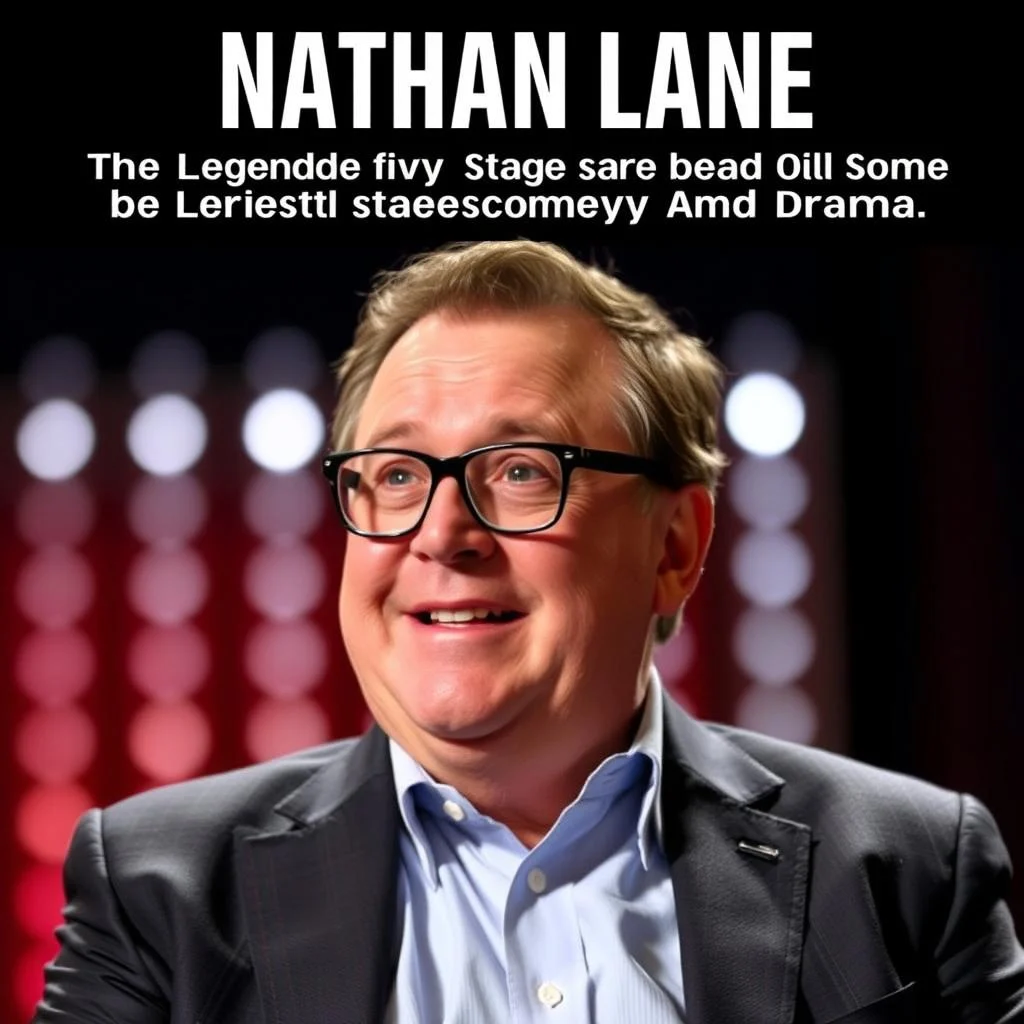
Nathan Lane isn’t just a name in entertainment—he’s a force. With a career spanning over four decades, Lane has carved out a unique space in both theater and film, blending razor-sharp comedic timing with surprising emotional depth. Whether he’s stealing scenes on Broadway or delivering deadpan one-liners on screen, Lane commands attention. And honestly? He deserves every bit of it.
Born Joseph Lane in 1956 in Jersey City, New Jersey, he adopted the stage name “Nathan” after the iconic detective Nathan Detroit from Guys and Dolls—a role he’d later play to critical acclaim. That choice wasn’t random. It signaled his deep connection to the musical theater tradition, a world where he’d soon become a cornerstone.
What sets Lane apart isn’t just his talent—it’s his versatility. He can go from slapstick hilarity in The Producers to gut-wrenching drama in Death of a Salesman without missing a beat. That range is rare. Most actors pick a lane—comedy or drama—and stick to it. Lane? He owns both.
Let’s break down why Nathan Lane remains one of the most respected and beloved figures in American performance art—and why his influence will echo for generations.
Early Life and the Road to Broadway
Lane didn’t grow up dreaming of the spotlight. His family was working-class, and his father died when he was just 10. His mother raised three boys alone, juggling jobs to make ends meet. Money was tight, but creativity wasn’t scarce. Lane found solace in performance early, participating in school plays and local theater productions.
He studied at St. Joseph’s College in New York but dropped out after a year, drawn instead to the gritty energy of Off-Broadway. In the late 1970s, he began performing in small venues, often in experimental or fringe theater. Those years were lean—sometimes literally. But they built resilience.
His big break came in 1982 with The Man Who Came to Dinner at the Manhattan Theatre Club. Though the play wasn’t a smash, Lane’s performance caught the eye of critics. He was funny, yes—but there was something more: a raw authenticity beneath the humor.
By the mid-80s, he was a regular in New York’s theater scene. He worked with playwrights like Terrence McNally and directors like Jack O’Brien. These collaborations weren’t just gigs—they were apprenticeships. Lane learned how to listen, react, and elevate material through presence, not just punchlines.
Breakthrough: The Producers and the Tony Awards
Everything changed in 2001. That’s when Lane starred as Max Bialystock in Mel Brooks’ The Producers on Broadway. The show was a cultural phenomenon—a bold, bawdy musical about two scheming producers who plan to oversell shares in a flop. It was satire at its finest, and Lane was at the center of it.
His performance was electric. He balanced Max’s sleazy charm with moments of vulnerability, making the character oddly sympathetic. Critics raved. Audiences sold out. And Lane? He won his first Tony Award for Best Actor in a Musical.
But that wasn’t his only Tony. In 2018, he took home the award again for his role as Roy Cohn in Angels in America. That’s right—two Tonys, nearly two decades apart, in completely different genres. That kind of range is almost unheard of.
What’s more, Lane’s Tony wins weren’t just personal triumphs—they signaled a shift in how Broadway viewed comedic actors. For years, musical comedy was seen as “lesser” than straight drama. Lane proved that comedy, when done right, could be just as powerful, just as transformative.
His acceptance speeches? Legendary. At the 2001 ceremony, he thanked his mother, his partner, and the LGBTQ+ community—a bold move at the time. He didn’t shy away from identity. He celebrated it.
Nathan Lane Movies and TV Shows: Beyond the Stage
While Broadway is his home base, Lane’s film and television work is equally impressive. He’s not just a stage actor who dabbles in screen roles—he’s a full-fledged multimedia star.
His film debut came in 1994 with The Birdcage, a remake of the French classic La Cage aux Folles. Lane played Albert, the flamboyant, scene-stealing partner of Robin Williams’ character. The chemistry between them was off the charts. Lane’s physical comedy—his exaggerated gestures, his perfectly timed eye rolls—made Albert unforgettable.
The movie was a box office hit, grossing over $185 million worldwide. More importantly, it challenged stereotypes. Albert wasn’t a caricature—he was a fully realized person, funny but deeply human. Lane brought nuance to a role that could’ve easily been reduced to cliché.
He followed that with roles in Stuart Little (1999), where he voiced Snowbell the cat—a sarcastic, world-weary feline with a heart of gold. The film was a family favorite, and Lane’s voice work added layers of wit and warmth. Kids loved it. Adults quoted it.
On television, Lane has been equally busy. He starred in The People v. O.J. Simpson: American Crime Story as F. Lee Bailey, bringing gravitas to a complex legal figure. He’s appeared in Modern Family, Will & Grace, and The Good Fight, often as guest stars who steal the episode.
One of his most recent TV roles? As Felix Unger in the 2023 revival of The Odd Couple. Yes, the same role Jack Lemmon made famous. Lane didn’t try to copy Lemmon—he made it his own. His Felix was neurotic, yes, but also oddly endearing. Critics praised his ability to honor the original while adding fresh layers.
And let’s not forget his voice work. Lane has lent his distinctive tone to animated projects like Brother Bear and The Lion Guard. His voice is instantly recognizable—dry, witty, with a hint of melancholy beneath the humor.
Nathan Lane in Death of a Salesman: A Dramatic Triumph
For many, Lane is synonymous with comedy. But his turn in Death of a Salesman proved he’s just as compelling in drama.
In 2012, he starred as Willy Loman in a Broadway revival directed by Mike Nichols. Wait—Willy Loman? The tragic, broken salesman made famous by Lee J. Cobb and Dustin Hoffman? That’s right. And Lane nailed it.
At first, some critics were skeptical. Could a comedian known for The Producers handle Arthur Miller’s masterpiece? The answer? Absolutely.
Lane’s Willy was layered. He wasn’t just a deluded dreamer—he was a man crushed by the American Dream, desperate to leave a legacy for his sons. Lane brought a raw vulnerability to the role, especially in the final scenes. When Willy breaks down in the kitchen, talking to his dead brother Ben, Lane’s performance was heartbreaking. No jokes. Just truth.
The production received rave reviews. The New York Times called it “a revelation.” Lane earned a Tony nomination for Best Actor in a Play—his first in that category. He didn’t win, but the nomination itself was a statement: comedy and drama aren’t opposites. They’re tools. And Lane wields both masterfully.
What’s more, his performance opened doors for other comedic actors to take on dramatic roles. It showed that range isn’t just possible—it’s powerful.
Personal Life: Nathan Lane’s Husband and Private World
Lane has always been private about his personal life—but not secretive. He’s open about who he is, just careful about what he shares.
In 2015, he married his longtime partner, Devlin Elliott, a painter and former ballet dancer. The wedding was small, held in a private ceremony in New York. Lane described it as “a quiet celebration of love.”
They’ve been together since the early 2000s. Elliott, who keeps a low profile, is rarely seen at public events. But Lane has spoken warmly about their relationship in interviews. “He’s my anchor,” he once said. “He keeps me grounded.”
Lane is also a vocal advocate for LGBTQ+ rights. He came out publicly in 1996, during an interview with The Advocate. At the time, it was rare for a mainstream actor—especially one known for comedy—to be openly gay. Lane didn’t make a big deal out of it. He just stated it, simply: “I’m gay. So what?”
But his visibility mattered. For young queer performers, seeing someone like Lane—successful, respected, unapologetically himself—was empowering. He didn’t have to be a martyr or a symbol. He could just be an artist.
He’s also been involved in HIV/AIDS activism since the 1980s, working with organizations like Broadway Cares/Equity Fights AIDS. His commitment isn’t performative—it’s personal. Many of his friends and colleagues were lost to the epidemic. That loss shaped him.
Nathan Lane’s Legacy on Broadway
Broadway wouldn’t be the same without Nathan Lane. He’s performed in over 20 productions on the Great White Way, from classics like Guys and Dolls to modern hits like The Addams Family.
His portrayal of Nathan Detroit in the 1992 revival of Guys and Dolls is still considered definitive. He brought a swagger to the role, blending charm with comic timing. The production won three Tonys, including Best Revival of a Musical.
He’s also a favorite of directors and playwrights. Terrence McNally wrote roles with Lane in mind. Jack O’Brien cast him in multiple productions. They trust him—not just because he’s talented, but because he’s reliable. He shows up, he prepares, he elevates everyone around him.
And audiences? They adore him. There’s a loyalty to Lane that goes beyond fandom. It’s respect. People know they’re seeing something special when he’s on stage.
His influence extends beyond performance. He’s mentored younger actors, spoken at colleges, and supported arts education. He knows how hard it is to make it in theater—and he wants to make it easier for the next generation.
Why Nathan Lane Still Matters in 2026
In an era of streaming, social media, and short attention spans, live theater can feel like a relic. But Lane reminds us why it matters.
He performs live. No cuts. No retakes. Just him, the actors, and the audience, sharing a moment that can’t be replicated. That immediacy is magic.
And his work continues to resonate. In 2025, he starred in a limited-run revival of La Cage aux Folles at the Kennedy Center. Critics called it “a masterclass in musical theater.” Fans traveled from across the country to see him.
He’s also working on a memoir, set for release in late 2026. Early excerpts suggest it’ll be candid—funny, yes, but also reflective. He’s not afraid to talk about failure, doubt, or the cost of fame.
What’s more, Lane represents something rare: authenticity. In an industry obsessed with image, he’s stayed true to himself. He doesn’t chase trends. He follows his instincts.
And that’s why he endures.
Key Takeaways
| Achievement | Details |
| Tony Awards | Won in 2001 for The Producers and 2018 for Angels in America |
| Broadway Debut | 1982 in The Man Who Came to Dinner |
| Film Breakthrough | 1994’s The Birdcage with Robin Williams |
| Dramatic Role | Willy Loman in Death of a Salesman (2012) |
| Personal Life | Married to Devlin Elliott since 2015 |
| Advocacy | Longtime supporter of LGBTQ+ rights and HIV/AIDS causes |
Frequently Asked Questions
What is Nathan Lane’s most famous role?
While he’s known for many, his role as Max Bialystock in The Producers is arguably his most iconic. It earned him a Tony and introduced him to a global audience. But fans also cherish his work in The Birdcage and Guys and Dolls.
Is Nathan Lane married?
Yes. He married his partner, Devlin Elliott, in 2015. They’ve been together since the early 2000s and live a relatively private life in New York.
Has Nathan Lane ever won a Tony Award?
Yes—twice. He won Best Actor in a Musical for The Producers in 2001 and again for Angels in America in 2018. He’s also received multiple nominations across categories.
What was Nathan Lane’s role in Death of a Salesman?
He played Willy Loman in the 2012 Broadway revival. His performance was praised for its emotional depth and marked a significant moment in his dramatic career.
What movies has Nathan Lane been in?
He’s appeared in The Birdcage, Stuart Little, MouseHunt, and Brother Bear, among others. He’s also done extensive voice work for animated films and TV shows.
Final Thoughts
Nathan Lane isn’t just a performer—he’s a storyteller. Whether he’s making us laugh, cry, or think, he does it with honesty and heart. His career is a masterclass in longevity, adaptability, and artistry.
He’s proof that talent, when paired with integrity, can withstand the test of time. And in 2026, as the entertainment world evolves, Lane remains a steady, shining presence.
If you’ve never seen him live, do yourself a favor. Catch a show. Watch a film. Listen to an interview. You’ll see why he’s not just a star—he’s a legend.
And if you’re looking for inspiration in your own creative journey? Look no further than Nathan Lane. He didn’t wait for permission. He showed up, worked hard, and let his work speak for itself.
That’s the real magic.