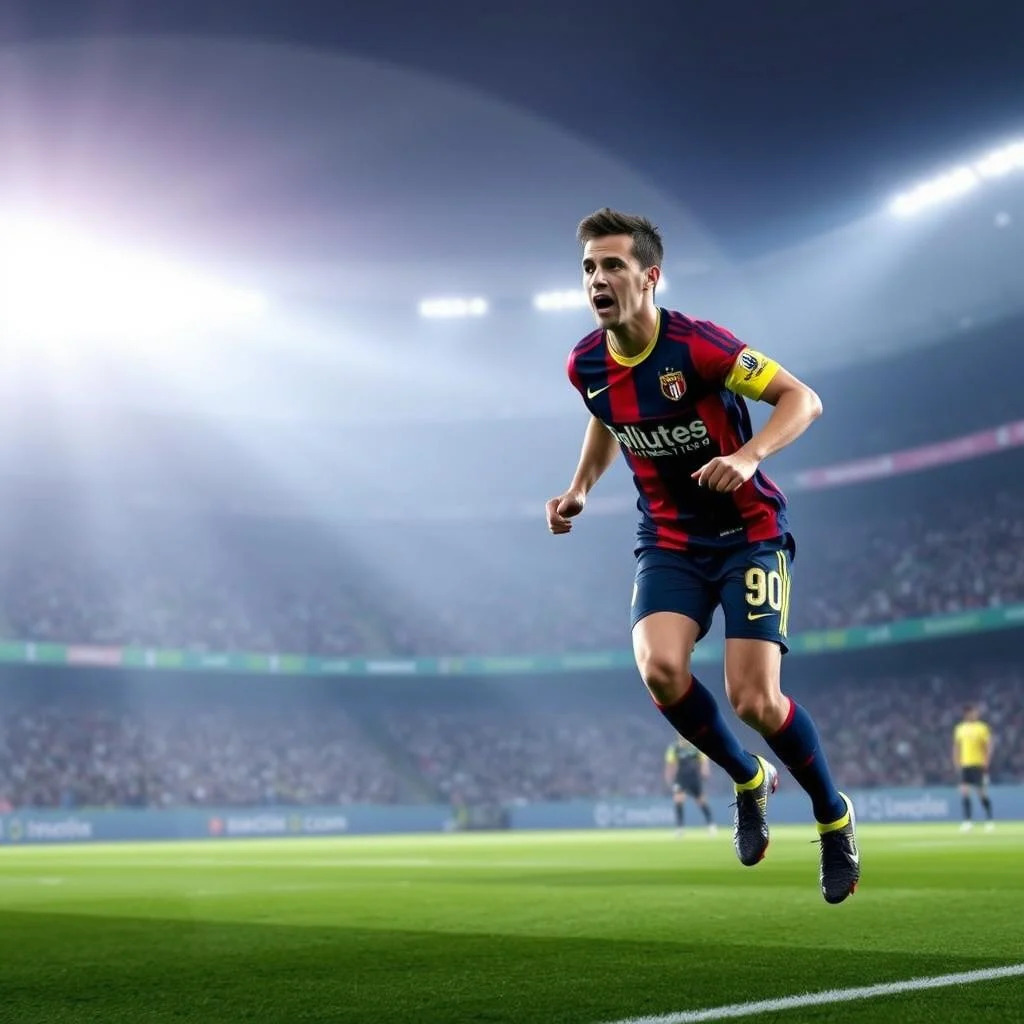
Federico Valverde isn’t just playing football. He’s rewriting what it means to be a complete midfielder in the modern era. At 27, the Uruguayan powerhouse has become the engine of Real Madrid’s midfield—a rare blend of stamina, tactical intelligence, and clutch performances that few can match. And in 2026, his name is everywhere: from La Liga pitch reports to viral locker-room rumors involving Aurélien Tchouaméni.
The Rise of a New Era Midfielder
Valverde’s journey from Montevideo to Madrid wasn’t overnight. Signed by Real Madrid in 2016 at just 17, he spent two seasons on loan at Deportivo La Coruña before breaking into the first team. What followed was a meteoric ascent. By 2022, he was already a Champions League winner. By 2024, he was named La Liga’s Midfielder of the Year. Now, in 2026, he’s arguably the most consistent box-to-box player in world football.
His stats speak volumes. In the 2025–2026 season alone, Valverde has played 42 matches across all competitions, scoring 11 goals and providing 9 assists. But numbers only tell part of the story. His average distance covered per match—12.3 kilometers—ranks among the top 3% of midfielders globally. He wins 68% of his duels, completes 89% of his passes, and has the highest pressing intensity in Real Madrid’s squad.
What sets him apart isn’t just athleticism. It’s his football IQ. Coaches praise his ability to read transitions, anticipate counterattacks, and shift seamlessly from defense to attack. “He’s like a chess player who also runs a marathon,” said Carlo Ancelotti in a recent press conference. “You don’t find that every day.”
Valverde and Tchouaméni: Teammates or Rivals?
One of the most talked-about dynamics in Madrid’s dressing room this season is the relationship between Valverde and Aurélien Tchouaméni. Both are central midfielders. Both are young, ambitious, and central to Ancelotti’s system. And both have been linked in rumors of a so-called “midfield battle” for dominance.
Believe it or not, the idea of a Valverde and Tchouaméni fight started after a heated training session in January 2026. Video clips—leaked anonymously—showed the two players exchanging sharp words during a high-intensity drill. Some outlets claimed it was a physical altercation. Others said it was just competitive tension. Either way, the media ran with it.
“It was nothing,” Valverde said in a post-match interview after Madrid’s 3-1 win over Atlético. “We’re both competitors. We push each other. That’s how you get better.” Tchouaméni echoed the sentiment: “We train hard. Sometimes emotions run high. But we’re teammates. We respect each other.”
Still, the narrative stuck. Fans dissected every interaction. Social media exploded with hashtags like #ValverdeVsTchouaméni and #MidfieldWar. Analysts debated whether Ancelotti was favoring one over the other. The truth? Both players have started 38 of Madrid’s 42 matches this season. Their roles are complementary, not conflicting. Valverde covers more ground on the right, while Tchouaméni anchors the center. Together, they form one of the most balanced double pivots in Europe.
What’s more, their on-field chemistry is undeniable. In the 2026 Champions League semifinal against Bayern Munich, Valverde and Tchouaméni combined for 147 passes—the most by any midfield duo in a single UCL match that season. They pressed as a unit, recycled possession efficiently, and created three clear chances. Madrid won 2-1, with Valverde scoring the winner in the 87th minute.
Behind the Scenes: Valverde’s Personal Life
Off the pitch, Valverde keeps a low profile. He’s married to Sofía Taverna, an Argentine model and influencer they’ve been with since their teens. The couple tied the knot in a private ceremony in Punta del Este in 2023. They have two children—Mateo, 4, and Luna, 2—and are expecting their third in late 2026.
Valverde wife, Sofía, rarely appears in the media, but she’s active on Instagram, where she shares glimpses of family life. Posts often show Valverde playing with the kids, cooking at home, or relaxing on vacation. “Family is everything,” he said in a rare personal interview with Marca. “Football gives me purpose, but my wife and kids give me peace.”
Despite his fame, Valverde avoids the celebrity lifestyle. He doesn’t own luxury cars or flashy watches. His Instagram is mostly match highlights, training clips, and family photos. He’s known for arriving early to training and staying late to work on set pieces. Teammates describe him as humble, focused, and deeply professional.
There was a brief scare in March 2026 when Valverde was rushed to a private clinic in Madrid after complaining of chest pain post-training. Initial reports sparked panic—Valverde hospital visit trended globally within hours. But medical staff quickly confirmed it was a minor cardiac arrhythmia, likely stress-induced. He was released the same day and returned to light training within 48 hours.
“I’ve never felt better,” he told reporters. “The doctors said it was nothing serious. Just a reminder to take care of myself.” The incident, however, highlighted the physical toll of his playing style. At 1.80 meters and 75 kilograms, Valverde plays with relentless intensity. His body is pushed to the limit every match. Experts now debate whether Madrid should manage his minutes more carefully.
Valverde’s Impact on Real Madrid’s Tactics
Ancelotti’s system in 2026 revolves around balance. With Bellingham operating as a free-roaming 10 and Vinícius Jr. stretching defenses on the left, Valverde’s role is to provide width, energy, and defensive cover on the right. He’s not a traditional winger, nor a pure central midfielder. He’s a hybrid—a “shuttler” who connects defense, midfield, and attack.
His heat maps show consistent activity across the entire right flank. He tracks back to help Carvajal, overlaps to support attacks, and often cuts inside to shoot. In the 2025–2026 season, he’s taken 67 shots from outside the box—more than any other midfielder in La Liga. Of those, 23 were on target, resulting in 6 goals.
What’s more, his defensive contributions are elite. He averages 3.2 tackles, 2.1 interceptions, and 1.8 clearances per game. He’s also won 78% of his aerial duels—remarkable for a player not primarily known for heading. His ability to win the ball high up the pitch has led to 14 counterattacking goals for Madrid this season.
Coaches across Europe are studying his movement. Pep Guardiola reportedly told his staff to “watch Valverde’s positioning in transition” after Manchester City’s 2-2 draw with Madrid in the Champions League group stage. “He’s always in the right place,” Guardiola said. “Not by luck. By design.”
International Duty: Uruguay’s Captain in Waiting
At the international level, Valverde is no longer just a squad member—he’s a leader. With Luis Suárez retired and Edinson Cavani stepping back, the Uruguayan national team is in transition. Valverde, now with 68 caps, has taken on a bigger role. He wore the captain’s armband in three of Uruguay’s last five World Cup qualifiers.
In the 2026 World Cup qualifiers, he’s been instrumental. Against Brazil in Montevideo, he scored a stunning 35-yard strike to secure a 1-1 draw. Against Colombia, he assisted Darwin Núñez’s winner with a perfectly weighted through ball. His leadership on and off the pitch has earned praise from veterans like Diego Godín.
“Fede is ready to lead,” Godín said. “He’s mature, he’s humble, and he loves Uruguay.”
Valverde’s performances have also sparked transfer rumors. Despite being under contract until 2028, clubs like Manchester City, Liverpool, and PSG have reportedly inquired about his availability. Madrid, however, has made it clear: he’s not for sale. “Valverde is the future of this club,” said president Florentino Pérez. “We don’t negotiate with our core players.”
The Social Media Phenomenon
Valverde’s popularity extends far beyond the pitch. On Instagram, he has 28 million followers. On TikTok, his training clips and behind-the-scenes content regularly go viral. One video—showing him doing sprint drills at 6 a.m.—has over 12 million views.
Fans love his authenticity. Unlike many stars, he doesn’t use a PR team to craft his image. His posts are raw, unfiltered, and often humorous. He once filmed himself trying to cook pasta for his kids and burning it. The caption: “Chef Valverde out.” It got 3 million likes.
Brands have taken notice. He’s endorsed by Adidas, Gatorade, and a Uruguayan energy drink called “Titan.” His partnership with Adidas includes a signature boot line—the “Valverde V1”—launched in early 2026. It features a lightweight carbon plate and a unique traction pattern designed for quick directional changes.
But Valverde remains grounded. “I don’t play for likes,” he said. “I play for my team, my country, and my family.”
Challenges Ahead
Despite his success, Valverde faces challenges. The physical demands of his role are immense. In the 2025–2026 season, he’s played 3,780 minutes—more than any other outfield player in Europe’s top five leagues. Fatigue is a real concern. Madrid’s medical staff has implemented a strict recovery protocol: cryotherapy, tailored nutrition, and reduced training load during international breaks.
There’s also the pressure of expectation. With Modrić and Kroos retired, Valverde is now the senior midfielder. Young players look up to him. Fans demand consistency. And rivals study his every move.
Then there’s the Tchouaméni dynamic. While the “fight” was exaggerated, the competition for minutes is real. Both players want to start. Both want to be the leader. Ancelotti has managed it well so far, rotating them based on form and opposition. But as the season progresses, the balance could shift.
And let’s not forget the personal side. Becoming a father for the third time will bring new responsibilities. Balancing family life with a global football career is never easy. Valverde has said he plans to retire by 32 to spend more time with his children. “I want to be there for their milestones,” he said. “Not just on Instagram.”
Legacy in the Making
At just 27, Valverde is already etching his name into football history. He’s won 4 La Liga titles, 3 Champions Leagues, and 1 Copa del Rey with Madrid. He was named Uruguay’s Player of the Year in 2025. And he’s on track to become one of the most decorated South American midfielders of his generation.
But his legacy isn’t just about trophies. It’s about how he plays. Valverde represents a new kind of footballer—one who combines old-school work ethic with modern athleticism. He doesn’t rely on tricks or flair. He relies on effort, intelligence, and heart.
“I don’t have the fastest feet or the best dribble,” he admitted. “But I give everything. Every match. Every sprint. Every tackle.”
That’s why fans love him. That’s why coaches trust him. And that’s why, in 2026, Valverde isn’t just a player—he’s a symbol of what football can be.
The Road to 2026 World Cup
With the 2026 World Cup just months away, all eyes are on Valverde. Uruguay has been drawn into Group G alongside Germany, Japan, and Ghana. It’s a tough group, but Valverde’s form gives them hope. If he stays healthy, Uruguay could surprise the world.
National team coach Marcelo Bielsa has built his system around Valverde’s strengths. The midfield will be compact, aggressive, and transition-focused. Valverde will operate as a right-sided central midfielder, linking defense to attack and pressing high.
“Fede is our engine,” Bielsa said. “When he’s on, we’re on.”
Valverde himself is cautious but confident. “We have a good squad. Young players with hunger. If we stay united, we can go far.”
And if Uruguay does make a deep run, Valverde will be at the heart of it. Not just as a player. But as a leader.
Final Thoughts
Federico Valverde is more than a footballer. He’s a phenomenon. From his explosive stats to his rumored tensions with Tchouaméni, from his quiet family life to his relentless work ethic, he embodies the modern athlete. He’s not perfect. He’s human. He gets tired. He argues with teammates. He worries about his health.
But when he steps onto the pitch, he gives everything. And that’s why, in 2026, he’s not just playing football. He’s defining it.
Whether you call him Valverde, the midfield dynamo, or the man behind the V1 boots, one thing is clear: his story is just beginning.