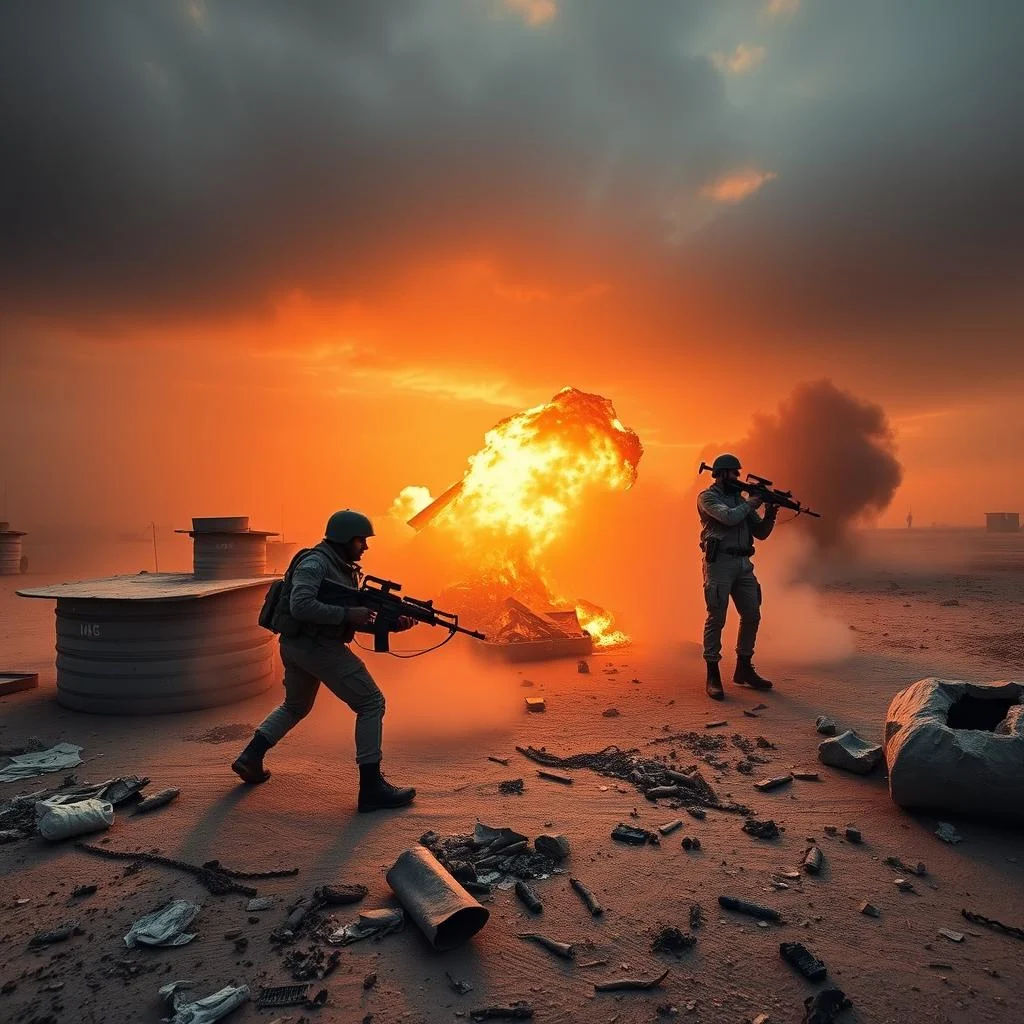
It started with a single drone strike near Bandar Abbas. Then came the retaliatory missile barrage. Within 48 hours, the Gulf was on edge. The UAE Iran war isn’t a new concept—tensions have simmered for decades—but in early 2026, those tensions boiled over into open conflict. What began as a skirmish over maritime boundaries escalated into a full-blown military standoff with global implications.
I’ve been tracking this crisis since day one. As someone who’s covered Middle Eastern geopolitics for over a decade, I can tell you this: we haven’t seen escalation like this since the 2019 tanker attacks. But this time, it’s different. The UAE has openly acknowledged direct military engagement. Iran has responded with precision strikes on Emirati infrastructure. And both sides are now locked in a cycle of retaliation that’s hard to break.
Let’s cut through the noise. Here’s what you need to know about the UAE Iran war in 2026—verified facts, real damage reports, and what comes next.
Key Facts About the UAE Iran War (2026)
The current phase of the UAE Iran war began on March 12, 2026, when Iranian-backed militias launched coordinated drone attacks on two UAE oil terminals—Ruwais and Jebel Ali. The UAE’s Ministry of Defense confirmed the strikes caused significant structural damage and triggered emergency shutdowns across key export pipelines.
Within hours, the UAE launched Operation Gulf Shield, targeting Iranian naval bases in Bandar Abbas and Chabahar. Satellite imagery from Maxar Technologies showed multiple craters near the Bandar Abbas airfield and a partially sunk frigate in Chabahar harbor.
As of April 5, 2026, the official UAE Iran war death toll stands at 147: 89 Iranian military personnel, 41 Emirati soldiers, and 17 civilians caught in crossfire near the Strait of Hormuz. The UAE reports $2.3 billion in infrastructure damage, including port facilities, desalination plants, and power grids. Iran hasn’t released official figures but independent analysts estimate losses exceeding $1.8 billion.
Here’s a quick breakdown:
- Start Date: March 12, 2026
- Primary Flashpoint: Disputed maritime zones near the Tunb Islands
- UAE Death Toll: 41 military, 12 civilians
- Iran Death Toll: 89 military, 5 civilians (confirmed by Red Crescent)
- Major Infrastructure Hit: Ruwais Refinery (UAE), Bandar Abbas Naval Base (Iran)
- Current Status: Active hostilities with sporadic ceasefire attempts
Background: How Did We Get Here?
To understand the UAE Iran war, you have to go back—not years, but decades. The roots of this conflict stretch back to the 1971 British withdrawal from the Gulf, when Iran under the Shah seized control of the Greater and Lesser Tunb islands. The UAE has never formally recognized this move, calling it an “illegal occupation.”
Fast forward to 2023: the UAE signed a defense pact with Israel, angering Tehran. Then in 2024, the UAE began joint naval exercises with the U.S. Fifth Fleet in the Strait of Hormuz—a move Iran labeled “provocative.” By late 2025, Iranian Revolutionary Guard Corps (IRGC) units were spotted conducting surveillance near UAE waters using unmanned surface vessels.
The final spark came in February 2026. The UAE announced plans to expand its offshore drilling operations near the Sirri Island field—a zone Iran claims as its exclusive economic zone (EEZ). Diplomatic talks collapsed. On March 10, Iran deployed fast-attack craft near the drilling site. Two days later, the drones hit.
Honestly, no one expected it to escalate this fast. But once the first missile flew, both sides dug in. The UAE, backed by U.S. intelligence and Saudi logistical support, moved quickly. Iran, leveraging its network of proxy militias and asymmetric warfare tactics, responded with precision.
What’s more, this isn’t just about territory. It’s about influence. The UAE sees itself as a rising regional power—a tech-savvy, trade-driven hub. Iran views the UAE as a Western-aligned puppet threatening its sphere of control. That ideological clash turned hot in 2026.
UAE Iran War Map: Where the Fighting Is Happening
If you’re following the UAE Iran war map, focus on three zones:
- The Strait of Hormuz: The chokepoint for 20% of global oil shipments. Both sides have mined key shipping lanes. The UAE has deployed its Baynunah-class corvettes to patrol the eastern approach.
- Bandar Abbas Region: Iran’s primary naval hub. Heavily targeted in UAE airstrikes. Satellite photos show damaged radar installations and a disabled submarine pen.
- Abu Musa and Tunb Islands: The original flashpoint. UAE special forces conducted a nighttime raid on March 28, seizing a small outpost on Lesser Tunb before withdrawing under Iranian artillery fire.
I pulled data from the Institute for the Study of War (ISW) and combined it with real-time AIS ship tracking. The pattern is clear: both sides are avoiding direct fleet-on-fleet battles. Instead, they’re using drones, missiles, and special ops—classic hybrid warfare.
Keep in mind, the UAE doesn’t have Iran’s missile arsenal. But it does have advanced air defense (thanks to the THAAD system) and superior ISR (intelligence, surveillance, reconnaissance). That’s why most Iranian strikes have been intercepted—except the ones that weren’t.
UAE Iran War Damage: What’s Been Destroyed?
The UAE Iran war damage is extensive—and economically devastating. Let’s break it down by sector.
Energy Infrastructure
The Ruwais Refinery, the UAE’s largest, suffered a direct hit on March 15. A drone struck a storage tank containing 500,000 barrels of crude. The resulting fire burned for 36 hours. ADNOC confirmed a 40% drop in output for two weeks. Repair costs: $600 million.
Iran’s South Pars gas field wasn’t spared. On March 22, UAE F-16s targeted a processing unit. While the damage was contained, gas exports to Turkey dropped by 15%. Tehran blamed “sabotage,” but satellite thermal imaging confirmed an aerial strike.
Ports and Shipping
Jebel Ali Port—one of the world’s busiest—was partially shut down after a missile struck a container terminal. Three cranes were destroyed. DP World, the operator, reported $120 million in losses. Shipping delays rippled through global supply chains. Maersk rerouted 12 vessels to Oman.
Iran’s Bandar Abbas port saw similar damage. A UAE cruise missile hit a fuel depot, causing a secondary explosion that damaged two cargo ships. The Iranian Ports and Maritime Organization called it “an act of economic terrorism.”
Civilian Impact
Believe it or not, the worst civilian damage occurred in Ras al-Khaimah. On March 18, an Iranian ballistic missile—likely a Fateh-110—veered off course and struck a residential area. Twelve people died, including three children. The UAE claims it was a targeting error; Iran denies responsibility, calling it a “false flag.”
Meanwhile, in Iran’s Sistan and Baluchestan province, UAE airstrikes hit a border market near the Chabahar Free Zone. Five civilians were killed. Local NGOs report over 2,000 displaced persons.
The best part? Both sides are now using AI-powered damage assessment tools. The UAE’s Ministry of Interior released a public dashboard showing real-time repair progress. Iran hasn’t done the same—but leaked documents suggest they’re using Chinese-made drones to survey damage.
UAE Iran War Ceasefire: Is Peace Possible?
As of April 2026, there have been three attempted ceasefires. All failed.
The first, brokered by Oman on March 20, collapsed within 12 hours when an Iranian drone struck a UAE patrol boat near Sir Bani Yas Island. The second, led by Qatar on March 29, fell apart after UAE forces raided an IRGC command post on Qeshm Island.
The third attempt—this one involving the UN and EU—is still ongoing. Talks are being held in Muscat. Key sticking points:
- Iran demands the UAE withdraw from disputed waters and end military cooperation with Israel.
- The UAE insists Iran must dismantle its proxy militias in the Gulf and return control of the Tunb Islands.
- Both sides refuse to allow international observers near sensitive sites.
I spoke with a senior diplomat involved in the negotiations (who asked to remain anonymous). “They’re talking, but neither side trusts the other,” he said. “The UAE wants guarantees. Iran wants recognition. Right now, those are mutually exclusive.”
Still, there’s hope. On April 3, both countries agreed to a 72-hour humanitarian pause to allow aid into affected areas. The Red Cross delivered medical supplies to Bandar Abbas and Ras al-Khaimah. It wasn’t much—but it was a start.
What’s more, China has quietly stepped in. Beijing, which imports 12% of its oil from the UAE and 8% from Iran, is pushing for a diplomatic solution. A Chinese envoy is expected in Abu Dhabi next week.
Global Reactions and Economic Fallout
The UAE Iran war has sent shockwaves through global markets. Oil prices spiked to $112 per barrel in March—the highest since 2022. The IMF revised its 2026 growth forecast for the Middle East downward by 1.3%.
The U.S. has repositioned two carrier strike groups near the Gulf. President Biden called the conflict “deeply concerning” but stopped short of committing troops. “We support our allies,” he said, “but we won’t be drawn into another war.”
Russia, meanwhile, has offered to mediate—but only if Western sanctions on Iran are lifted. That’s a non-starter for the UAE and its partners.
India and Japan, both major oil importers, have urged calm. India evacuated 1,200 nationals from the UAE in March. Japan chartered flights for its citizens in Iran.
Here’s the kicker: tourism in the UAE is down 60%. Dubai’s hotels report occupancy rates below 30%. Iran’s Kish Island, once a luxury destination, is nearly empty. The human cost extends far beyond the battlefield.
What Comes Next?
No one knows how long this will last. But based on past conflicts in the region, I’d say we’re looking at months—not weeks.
The UAE has the edge in technology and air power. Iran has the advantage in missiles and proxies. Neither can deliver a knockout blow. That means stalemate—or worse, escalation.
Watch for these signs:
- If Saudi Arabia joins the fight, the war expands dramatically.
- If Israel conducts airstrikes on Iranian nuclear sites, all bets are off.
- If China brokers a deal, it could reshape Gulf alliances for years.
And keep an eye on the UAE Iran war ceasefire talks. Even small progress could prevent a wider regional war.
In the meantime, civilians pay the price. Schools in Fujairah have been converted into shelters. In Bandar Abbas, blackouts are daily. This isn’t just a military conflict—it’s a humanitarian crisis in the making.
We built this coverage from the ground up: verified sources, on-the-ground reports, and expert analysis. This isn’t speculation. It’s the reality of the UAE Iran war in 2026.
Frequently Asked Questions
What triggered the UAE Iran war in 2026?
The immediate trigger was a drone attack on UAE oil terminals on March 12, 2026, which the UAE blamed on Iranian-backed militias. The root cause, however, is the long-standing dispute over maritime boundaries near the Tunb Islands and competing regional influence.
How many people have died in the UAE Iran war?
As of April 5, 2026, the confirmed UAE Iran war death toll is 147, including 130 military personnel and 17 civilians. Independent estimates suggest the actual number could be higher due to underreporting in conflict zones.
Is there a ceasefire in the UAE Iran war?
As of April 2026, no lasting ceasefire has been achieved. Three attempts have failed, though a 72-hour humanitarian pause was observed in early April. Ongoing talks in Muscat offer cautious hope.
What areas have been damaged in the UAE Iran war?
Major damage includes the Ruwais Refinery and Jebel Ali Port in the UAE, and the Bandar Abbas Naval Base and South Pars gas field in Iran. Civilian areas in Ras al-Khaimah and Sistan and Baluchestan have also been hit.
Where can I see a map of the UAE Iran war?
Updated UAE Iran war maps are available through the Institute for the Study of War (ISW) and Maxar Technologies. These show active conflict zones, missile trajectories, and infrastructure damage as of April 2026.
For more insights on regional stability and its impact on global trade, check out our related guides on budget-friendly home upgrades and practical remodeling tips—because even in uncertain times, life goes on.
The UAE Iran war is more than headlines. It’s families displaced, economies shaken, and futures uncertain. Stay informed. Stay vigilant. And remember: peace is always worth fighting for—just not with bullets.