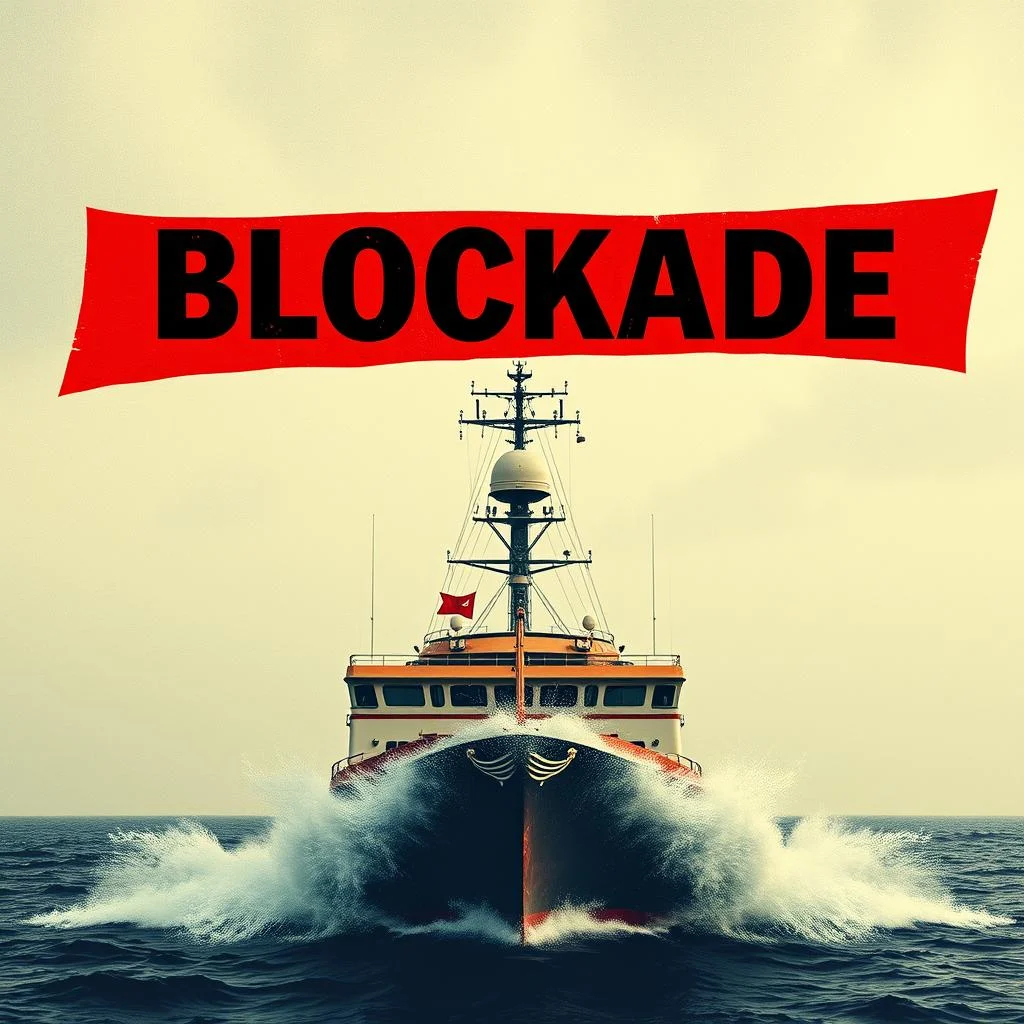
What Exactly Is a Blockade?
A blockade is an act of war where one nation uses military force to prevent ships or people from entering or leaving a specific area, usually a port or coastline. It’s not just a barrier—it’s a calculated move designed to weaken an opponent’s economy, morale, or military supply lines. The blockade meaning goes beyond physical obstruction; it’s a psychological tool, a statement of dominance.
Think of it like a chess move. You don’t always attack the king directly. Sometimes, you cut off its support. That’s what a blockade does. It isolates. It starves. It forces decisions.
Historically, blockades have played decisive roles. The Union’s Anaconda Plan during the American Civil War choked the Confederacy by blocking Southern ports. In 1962, the U.S. imposed a naval blockade of Cuba during the Cuban Missile Crisis—a moment that nearly sparked nuclear war. That event remains one of the most famous examples of a blockade of Cuba in modern history.
But blockades aren’t relics of the past. They’re alive and active in 2026.
The Strait of Hormuz: A Modern Flashpoint
Right now, the Strait of Hormuz is ground zero for one of the most volatile blockades in the world. This narrow waterway between Iran and Oman carries about 21 million barrels of oil per day—roughly 21% of global petroleum consumption. Any disruption here sends shockwaves through energy markets.
In early 2026, Iran began restricting access to the strait, citing “security concerns” over increased U.S. naval patrols. While not a full-scale blockade by traditional definition, the move has all the hallmarks: restricted passage, heightened military presence, and economic pressure.
We’ve seen Iranian fast-attack boats swarm commercial tankers. Drones patrol overhead. And satellite imagery shows mines being deployed near key shipping lanes. It’s not an official blockade—yet—but the intent is clear.
The blockade of the Strait of Hormuz isn’t just about oil. It’s about leverage. Iran knows that even the threat of closure can spike global prices. In March 2026, oil jumped 12% in a single day after reports of a tanker being detained.
And then there’s the mind games. Iranian state media broadcasts footage of naval drills with captions like “We control the Gulf.” It’s psychological warfare wrapped in military posturing. This is what experts call blockade mind games—using perception as much as physical force to achieve strategic goals.
Blockade Runners: The Shadow Economy of the Seas
When a blockade is in place, someone always finds a way around it. Enter the blockade runner.
These aren’t pirates. They’re entrepreneurs. Smugglers. Survivors. During the American Civil War, blockade runners used fast, low-profile ships to slip past Union vessels, delivering cotton to Europe and bringing back weapons and medicine.
Today’s blockade runners are more sophisticated. They use encrypted GPS, false manifests, and even AI-driven route optimization to avoid detection. In the Black Sea, Ukrainian grain exports continue despite Russian naval threats—thanks to a network of small, agile vessels operating under cover of darkness.
One such operation, based out of Odesa, uses modified fishing trawlers to move wheat and sunflower oil to Turkey and Egypt. These ships fly neutral flags, change course frequently, and communicate via satellite phones with pre-arranged codes. It’s risky. But the payoff? Up to $200,000 per shipment.
And it’s not just Ukraine. In the South China Sea, Chinese fishing fleets—many of which are state-backed—act as de facto blockade runners, asserting Beijing’s claims while avoiding direct military confrontation.
Even in peacetime, the concept lives on. The Blockade Runner Beach Resort in South Carolina, named after the Civil War-era ships, serves as a quirky reminder of this shadowy trade. It’s a tourist spot now, but the name carries history—and irony.
Blockade Mind Games: The Psychology of Control
Let’s be honest: half the battle in any blockade is mental.
A blockade isn’t just about stopping ships. It’s about sending a message. “We can cut you off.” “We decide who moves.” “We are in control.”
This is where blockade mind games come into play. Nations use propaganda, misinformation, and strategic leaks to amplify fear. During the 2025 standoff in the Taiwan Strait, Chinese state media released videos of amphibious assault drills with captions like “The island is surrounded.” No ships were actually blocking ports—but the psychological effect was real.
In the Middle East, Iran has used similar tactics. By releasing drone footage of U.S. carriers from uncomfortably close range, they project strength. They want the world to believe they can disrupt the strait at will.
And it works. Insurance premiums for ships passing through the Gulf have tripled since 2024. Shipping companies reroute vessels around Africa, adding 10–14 days to voyages. That costs money. Lots of it.
But here’s the twist: sometimes, the threat is more powerful than the action. A full blockade risks international backlash. But the possibility of one? That’s a tool you can use every day.
Historical Lessons: From Cuba to Crimea
To understand modern blockades, we need to look back.
The 1962 blockade of Cuba—called a “quarantine” by the U.S. to avoid the legal implications of a blockade—was a masterclass in crisis management. President Kennedy didn’t want war. He wanted to force the Soviets to remove nuclear missiles without firing a shot.
The U.S. Navy positioned destroyers and aircraft carriers around Cuba. Soviet ships approaching the island were intercepted. The world held its breath.
What made it work? Clarity. Communication. And backchannel diplomacy. Khrushchev and Kennedy exchanged letters. They found a face-saving exit: Soviet missiles out, U.S. missiles out of Turkey (secretly).
That crisis taught us that blockades can be resolved without bullets—if both sides want de-escalation.
Fast forward to 2026. Russia’s actions in the Black Sea echo that playbook. After annexing parts of southern Ukraine, Moscow declared a “temporary maritime exclusion zone” near Crimea. It’s not called a blockade, but the effect is the same: foreign ships are warned away, and Ukrainian ports are effectively cut off.
The difference? Today’s technology makes enforcement easier—and harder. Drones can patrol 24/7. Satellites track every vessel. But social media spreads panic faster than any radio broadcast in 1962.
The Legal Gray Zone: What Makes a Blockade Legal?
Not all blockades are created equal. International law, specifically the United Nations Convention on the Law of the Sea (UNCLOS), sets rules.
For a blockade to be legal, it must:
– Be declared and publicly announced
– Be effective (not just symbolic)
– Apply equally to all nations
– Allow humanitarian aid to pass
Violate any of these, and you’re not conducting a blockade—you’re committing an act of aggression.
That’s why Iran’s actions in the Strait of Hormuz are controversial. They haven’t formally declared a blockade. They haven’t set up a continuous naval cordon. But they’re still stopping ships, inspecting cargo, and delaying transit.
The U.S. and its allies call it “harassment,” not a blockade. But the line is thin. And in war, lines blur fast.
Meanwhile, Ukraine’s use of sea drones to target Russian vessels in the Black Sea raises another question: can a weaker nation impose a blockade? Technically, no. But if you sink enough ships, you can create a de facto no-go zone.
It’s messy. It’s evolving. And it’s rewriting the rules of naval warfare.
Economic Fallout: Who Pays the Price?
Blockades don’t just affect militaries. They hit civilians hardest.
When the Strait of Hormuz is threatened, gas prices rise. When Ukrainian grain can’t reach Africa, food insecurity spikes. When shipping routes change, supply chains break.
In 2025, the World Bank estimated that a full blockade of the Strait of Hormuz could cost the global economy $2.3 trillion over 18 months. That’s not just oil—it’s everything that depends on timely shipping: electronics, medicine, clothing.
And it’s not just big nations that suffer. Small island states, reliant on imports, face shortages within weeks. Sri Lanka, already in economic crisis, saw fuel rationing return in early 2026 after tanker delays.
Even tourism takes a hit. The Blockade Runner Beach Resort saw bookings drop 40% in 2025 as travelers avoided the southeastern U.S. coast amid rumors of naval drills.
The best part? Most of this damage is preventable. Better diplomacy. Clearer rules. International coalitions to protect shipping lanes.
But until then, the cost of blockades will be paid by everyday people.
Technology’s Role: Drones, AI, and the Future of Blockades
Modern blockades aren’t fought with wooden ships and cannons. They’re waged with drones, satellites, and algorithms.
In 2026, the U.S. Navy deployed a fleet of unmanned surface vessels (USVs) in the Persian Gulf. These 30-foot drones can patrol for weeks, detect mines, and even launch small missiles. They’re cheaper than manned ships—and they don’t risk human lives.
Meanwhile, AI is changing how blockades are planned. Machine learning models analyze weather, ship movements, and radar signatures to predict the best routes for blockade runners—or the best spots to intercept them.
China’s “ghost fleet” of over 100 autonomous fishing boats uses AI to mimic real fishing patterns while collecting intelligence. Are they blockade runners? Spies? Both?
And then there’s cyber. In 2025, a cyberattack on the Port of Rotterdam disrupted cargo tracking systems for three days. Was it a blockade? Not in the traditional sense. But the effect was the same: ships couldn’t dock.
We’re entering an era where blockades don’t need ships at all.
Humanitarian Blockades: When Aid Is Weaponized
One of the darkest forms of blockade is the humanitarian blockade—where food, medicine, and water are cut off to force surrender.
In Gaza, the 2023–2026 conflict saw repeated closures of border crossings, limiting access to clean water and medical supplies. The UN called it a “man-made humanitarian crisis.”
In Sudan, warring factions have blocked aid convoys, leaving millions at risk of famine. The World Food Programme estimates that 18 million people face acute hunger—partly due to deliberate obstruction.
These aren’t just military tactics. They’re crimes under international law. But enforcement is weak. And the world watches.
The blockade definition expands here: it’s not just about ships. It’s about survival.
How Nations Are Adapting
Smart countries are preparing.
The European Union launched the “Safe Seas Initiative” in 2025, funding alternative shipping routes and stockpiling critical goods. Germany now keeps a 90-day reserve of medical supplies.
Japan, dependent on Middle Eastern oil, is investing in liquefied natural gas (LNG) terminals and nuclear energy to reduce vulnerability.
And the U.S. is rebuilding its merchant marine fleet—something it neglected for decades. The Jones Act, which requires goods shipped between U.S. ports to be on American-built, -owned, and -crewed vessels, is finally being enforced more strictly.
Meanwhile, private companies are stepping up. Maersk, the world’s largest shipping company, now uses AI-powered risk assessment tools to reroute ships in real time. They’ve even partnered with cybersecurity firms to protect their digital infrastructure.
It’s not enough. But it’s a start.
The Role of International Coalitions
No single nation can secure the seas alone.
That’s why coalitions matter.
Operation Prosperity Guardian, led by the U.S., now includes 38 nations patrolling the Red Sea and Gulf of Aden. Their goal: protect commercial shipping from Houthi attacks and Iranian interference.
Similarly, NATO has increased its presence in the Black Sea, conducting joint exercises with Ukraine and Georgia. These aren’t blockades—but they’re deterrents.
And the UN is pushing for a new “Maritime Security Protocol” to clarify rules around blockades, especially in contested waters.
Progress is slow. But momentum is building.
What This Means for You
You might think blockades are distant problems. They’re not.
When oil prices spike, your commute costs more. When grain shipments stop, bread gets expensive. When supply chains break, your phone might not get repaired.
And it’s not just economics. Blockades fuel conflict. They increase mistrust. They make diplomacy harder.
But they also force innovation. They push nations to diversify. To cooperate. To think differently.
The best part? Awareness is the first step. Understanding what a blockade is—and what it does—helps us demand better policies. Stronger alliances. Smarter leadership.
Frequently Asked Questions
What is the legal definition of a blockade under international law?
A blockade is a legally recognized act of war that must be declared, effective, impartial, and allow humanitarian access. It’s governed by the San Remo Manual and UNCLOS. Without these elements, it’s considered an illegal act of aggression.
How do blockade runners avoid detection in 2026?
Modern blockade runners use encrypted communications, false identification, AI-optimized routes, and small, fast vessels. Some operate under neutral flags or disguise themselves as fishing boats. Technology has made evasion easier—but also increased the risk of interception.
Can a blockade be enforced without warships?
Yes. Cyberattacks, drone surveillance, and economic sanctions can create de facto blockades. In 2025, a cyberattack on a major port disrupted shipping for days—proving that physical ships aren’t always necessary.
Why is the Strait of Hormuz so important?
The Strait of Hormuz handles over 20% of the world’s oil. Any disruption there affects global energy prices, inflation, and supply chains. It’s a strategic chokepoint that nations compete to control.
Are there any peaceful alternatives to blockades?
Yes. Diplomacy, sanctions, and international mediation can achieve similar goals without military force. The 1962 Cuba crisis was resolved through backchannel talks—showing that dialogue can prevent escalation.
The reality is clear: blockades are not going away. But how we respond will define the next decade of global security. Whether it’s the Strait of Hormuz, the Black Sea, or a future flashpoint, the lessons of history, law, and human ingenuity must guide us.
And if you’re curious about other global developments shaping 2026, check out PSG: The Rise, Rivalries, and Road Ahead in 2026 for insights into how geopolitical tensions influence even the world of sports.
Or explore GCU: How Grand Canyon University Is Redefining Higher Education in 2026 to see how institutions are adapting to a world in flux.
And for a dose of pop culture amid the chaos, Dhurandhar Movie: The Ranveer Singh-Led Thriller Making Box Office Waves in 2026 offers a cinematic escape—because sometimes, we all need a break from the headlines.