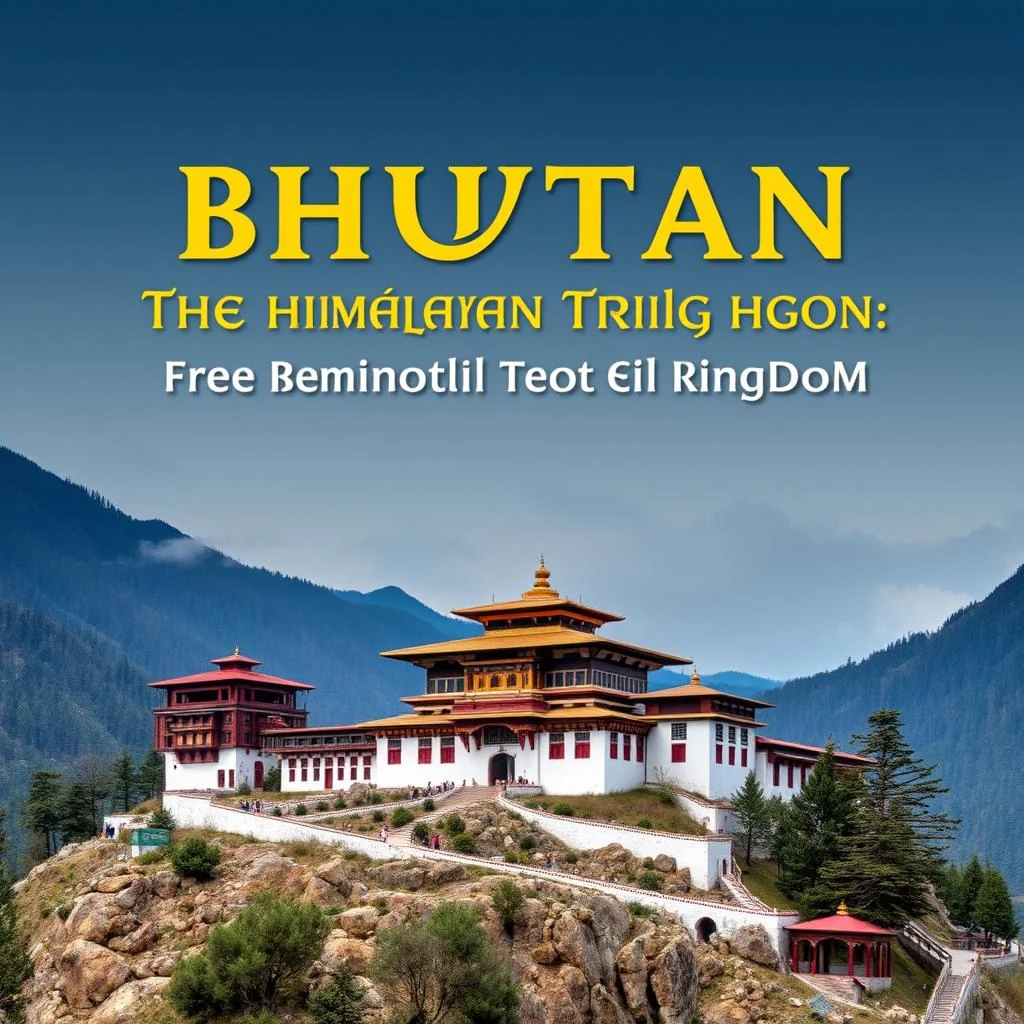
High in the eastern Himalayas, where mist clings to pine-covered slopes and prayer flags flutter in the wind, lies a country that measures success not by wealth but by well-being. Bhutan, often called the “Land of the Thunder Dragon,” is rewriting the global playbook on what it means to be a developed nation. In 2026, this small kingdom continues to draw international attention—not for its economic might, but for its bold commitment to Gross National Happiness (GNH), a philosophy that shapes everything from education to environmental policy.
I first visited Bhutan in 2018, drawn by stories of monks debating philosophy in sunlit courtyards and farmers tending terraced fields without tractors. What struck me wasn’t just the scenery—though the views of snow-capped peaks and emerald valleys are breathtaking—it was the quiet dignity of the people. They move through life with a sense of purpose that feels rare in our hyper-connected, productivity-obsessed world. And now, nearly a decade later, Bhutan’s experiment in mindful governance is more relevant than ever.
Where Is Bhutan? A Geographic Snapshot
Bhutan is a landlocked country nestled between two giants: China to the north and India to the south, east, and west. Covering just 38,394 square kilometers—roughly the size of Switzerland—it occupies a strategic yet secluded spot in South Asia. If you look at a map of the region, you’ll find Bhutan tucked into the folds of the Himalayan range, accessible only via a few high-altitude passes or its single international airport in Paro.
The terrain is dramatic. Over 70% of the country is covered in forests, and elevations range from 100 meters in the subtropical south to over 7,500 meters in the northern peaks. This rugged geography has historically isolated Bhutan, helping preserve its culture and traditions. But isolation doesn’t mean stagnation. In fact, Bhutan has carefully managed its integration into the modern world, balancing progress with preservation.
The People of Bhutan: Who Are the Bhutanese?
With a population of approximately 800,000 as of 2026, Bhutan is one of the least densely populated countries in Asia. The Bhutanese people are ethnically diverse, comprising three main groups: the Ngalop in the west, the Sharchop in the east, and various indigenous communities in the southern foothills. Despite this diversity, there’s a strong national identity rooted in shared values, language, and Buddhist principles.
The official language is Dzongkha, spoken by about half the population. English is widely taught in schools and used in government and business, making communication relatively easy for visitors. What’s more, literacy rates have climbed to over 70%, thanks to sustained investment in education since the 1960s.
Religion plays a central role in daily life. Vajrayana Buddhism is the state religion, and monasteries dot the landscape like ancient sentinels. Monks aren’t just spiritual figures—they’re educators, mediators, and community leaders. Yet Bhutan remains inclusive; Hinduism is practiced openly in the south, and religious freedom is constitutionally protected.
Cultural Identity and National Dress
One of the most visible markers of Bhutanese identity is dress. Both men and women wear traditional clothing in public offices, schools, and formal settings. Men don the gho, a knee-length robe tied at the waist, while women wear the kira, an ankle-length woven garment secured with brooches. These aren’t costumes—they’re living traditions, worn with pride.
Handicrafts also reflect deep cultural roots. Textiles, woodwork, and thangka paintings are not just art forms but expressions of belief and heritage. The government actively supports artisans through cooperatives and export initiatives, ensuring these skills aren’t lost to globalization.
Thimphu: The Heartbeat of Bhutan
The capital city, Thimphu, is unlike any other national capital. There are no traffic lights—just police officers directing cars with graceful hand signals at major intersections. Skyscrapers are banned by law to preserve the city’s low-rise, traditional aesthetic. Instead, you’ll find whitewashed dzongs (fortress-monasteries), bustling markets selling red rice and dried chilies, and quiet parks where elders play paa, a traditional board game.
Thimphu is also the administrative and cultural hub. It houses the King’s palace, the National Memorial Chorten, and the Folk Heritage Museum, which offers a window into rural Bhutanese life. Despite its modest size—home to around 120,000 people—Thimphu pulses with energy. Young entrepreneurs run cafes serving espresso alongside butter tea, and startups are beginning to emerge in sectors like eco-tourism and digital services.
The Bhutan Flag: Symbolism in Red and Yellow
The national flag of Bhutan is instantly recognizable. It features a white dragon across a diagonal divide of yellow (top) and orange-red (bottom). The dragon represents the Drukpa Kagyu school of Tibetan Buddhism, while the colors symbolize secular authority (yellow) and spiritual power (red). The dragon holds jewels in its claws, signifying wealth and the protection of the nation.
Interestingly, the flag wasn’t adopted until 1969—relatively late compared to other nations. Its design reflects Bhutan’s dual system of governance, historically blending religious and royal authority. Today, it flies proudly over government buildings, schools, and homes, a constant reminder of national unity.
Gross National Happiness: More Than a Slogan
When Bhutan introduced Gross National Happiness in the 1970s, many dismissed it as a quirky slogan. But today, GNH is a fully operational framework guiding national policy. Unlike GDP, which measures output, GNH assesses well-being across nine domains: psychological well-being, health, education, time use, cultural diversity, good governance, community vitality, ecological resilience, and living standards.
Every five years, the Centre for Bhutan & GNH Studies conducts a nationwide survey to gauge progress. In the 2025 GNH Index, 58.7% of Bhutanese reported being “happy” or “extensively happy,” up from 48.7% in 2015. That might not sound revolutionary—but consider this: Bhutan achieves this while maintaining carbon neutrality and protecting over 50% of its land as national parks or biological corridors.
“We don’t believe development should come at the cost of our soul,” says Dr. Karma Tshomo, a policy advisor in Thimphu. “Growth is important, but only if it serves people, not the other way around.”
Education with Values
Bhutan’s education system embodies GNH principles. Students don’t just learn math and science—they study mindfulness, ethics, and environmental stewardship. Schools incorporate meditation sessions, community service, and local history into the curriculum. The result? A generation that values balance over burnout.
Universities are also adapting. The Royal University of Bhutan now offers courses in GNH studies, sustainable development, and traditional medicine. International partnerships with institutions in Norway, Japan, and Canada help blend global knowledge with local wisdom.
Economy and Tourism: Walking the Tightrope
Bhutan’s economy remains modest. Hydropower exports to India account for nearly 25% of government revenue. Agriculture employs about 60% of the workforce, though mechanization is slowly increasing. Tourism is carefully regulated—visitors must pay a daily tariff (currently $200–$250 per person, inclusive of lodging, meals, transport, and a guide) to ensure high-value, low-impact travel.
This “high-value, low-volume” model limits mass tourism while funding conservation and community projects. In 2025, Bhutan welcomed just over 300,000 tourists—a fraction of Nepal’s 1.2 million—but each visitor contributes directly to local economies. Homestays, craft sales, and guided treks keep money circulating within villages.
Still, challenges remain. Youth unemployment hovers around 15%, and many graduates seek opportunities abroad. The government is responding with vocational training programs and incentives for tech startups. One such initiative, the “Digital Drukyul” plan, aims to expand broadband access and foster innovation—without sacrificing cultural integrity.
Environmental Stewardship: A Global Model
Bhutan is the world’s only carbon-negative country. It absorbs more CO₂ than it emits, thanks to vast forests and strict environmental laws. The constitution mandates that at least 60% of the country remain under forest cover for all time—a target it already exceeds.
Renewable energy is another pillar. Over 99% of electricity comes from hydropower, and plans are underway to develop solar and wind projects. Waste management is taken seriously too: plastic bags were banned in 1999, and single-use plastics followed in 2020. In Thimphu, composting and recycling programs are community-driven and widely adopted.
Wildlife thrives here. Tigers, snow leopards, and red pandas roam protected habitats. The government collaborates with NGOs like WWF to monitor species and mitigate human-wildlife conflict. For a country so small, Bhutan punches far above its weight in conservation.
Challenges Ahead: Modernization Without Erosion
For all its successes, Bhutan isn’t immune to global pressures. Urban migration is rising, especially among young people. Social media exposes youth to Western ideals, sometimes clashing with traditional values. Mental health issues, once stigmatized, are gaining recognition—suicide rates have prompted national awareness campaigns.
Political evolution continues too. Bhutan transitioned from an absolute monarchy to a constitutional democracy in 2008. Today, it holds regular elections, and political parties compete peacefully. Yet the monarchy remains deeply respected; King Jigme Khesar Namgyel Wangchuck is widely seen as a unifying figure.
Economically, dependence on India is both a strength and a vulnerability. While hydropower revenues provide stability, trade imbalances and currency pegging (the Bhutanese ngultrum is tied to the Indian rupee) limit autonomy. Diversification is key—and the government knows it.
Why Bhutan Matters in 2026
In an age of climate crisis, inequality, and digital overload, Bhutan offers a counter-narrative. It proves that development doesn’t have to mean deforestation, consumerism, or social fragmentation. Its model isn’t perfect—no system is—but it provides a compelling alternative to the GDP-at-all-costs mindset.
International organizations are taking note. The UN has cited Bhutan as a case study in sustainable development. Academics flock to study its GNH framework. Even corporations are exploring how “happiness metrics” could reshape workplace culture.
But perhaps the most powerful lesson is simpler: progress can be measured in smiles, not just spreadsheets. As one farmer in Punakha told me, “We don’t need more things. We need more time—to talk, to walk, to be.”
Frequently Asked Questions
What language do people speak in Bhutan?
The official language is Dzongkha, but English is widely used in education and government. Many Bhutanese also speak Nepali, Hindi, or regional dialects depending on their ethnic background.
How many people live in Bhutan?
As of 2026, Bhutan’s population is approximately 800,000, making it one of the least populous countries in Asia.
Is Bhutan safe for tourists?
Yes. Bhutan has very low crime rates and a strong culture of hospitality. The mandatory guided tour system ensures visitors are well-supported and respectful of local customs.
Can foreigners buy property in Bhutan?
No. Foreign ownership of land or real estate is prohibited. Tourism and business investments are allowed only through licensed operators and joint ventures with Bhutanese partners.
What makes Bhutan’s flag unique?
The Bhutan flag features a white dragon dividing yellow and orange-red halves. It’s one of the few national flags to include a mythical creature and symbolizes the harmony between spiritual and secular authority.
Bhutan’s story isn’t about rejecting modernity—it’s about choosing a different path through it. In 2026, as the world grapples with existential challenges, this tiny kingdom reminds us that the most advanced societies aren’t always the loudest or richest. Sometimes, they’re the ones that listen—to their people, their planet, and their purpose.
Whether you’re planning a trek to Tiger’s Nest Monastery or simply curious about alternative models of progress, keep Bhutan on your radar. It may be small on the map, but its impact is anything but.
For those interested in how other nations are redefining success, check out Subsidy: How Government Financial Support Shapes Markets and Lives (2026). Or explore how education systems are evolving globally in GCU: How Grand Canyon University Is Redefining Higher Education in 2026.