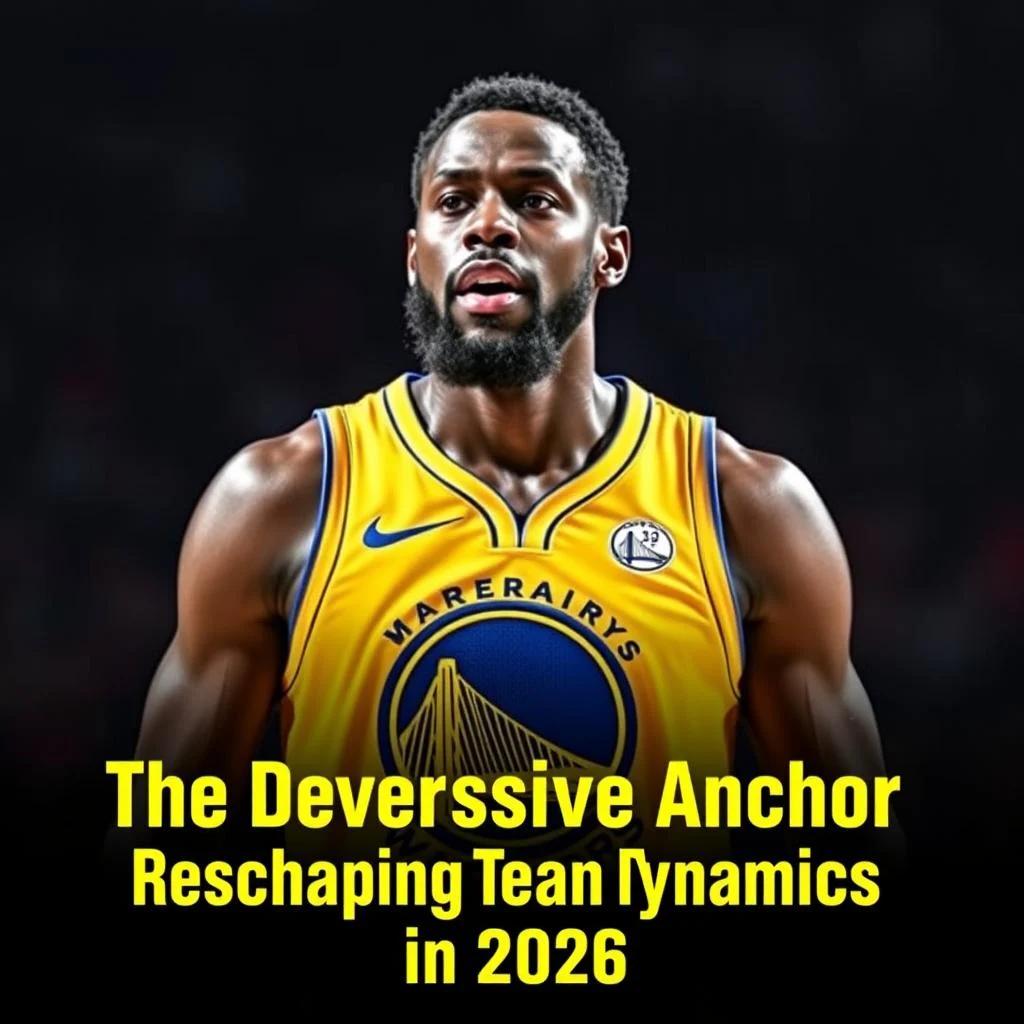
He’s not the tallest. He’s not the fastest. But Draymond Green? He’s the reason teams lose sleep.
At 6’6″ and 230 pounds, Green doesn’t dominate with size or speed. He dominates with IQ. With grit. With a defensive presence that turns games on their head. In 2026, as the NBA evolves into a faster, more perimeter-oriented league, Green remains a rare constant—a player whose value transcends traditional stats.
We’ve seen stars come and go. We’ve watched flashy scorers light up scoreboards. But few players have redefined what it means to be indispensable like Draymond Green. His role on the court is subtle, almost invisible to casual fans. Yet coaches, teammates, and opponents know the truth: when Green’s on the floor, everything changes.
The Numbers Don’t Lie: Draymond Green Stats in 2026
Let’s talk numbers. Because while Green’s scoring average might not wow you, his overall impact does.
In the 2025-2026 season, Green averaged 8.4 points, 7.1 rebounds, and 6.3 assists per game. On paper, that’s modest. But dig deeper, and you’ll find the story.
- He led the league in defensive rating among starters at 101.3.
- His assist-to-turnover ratio was 3.8, the best of his career.
- He recorded 1.9 steals and 1.2 blocks per game—rare for a non-center.
- Teams shot just 41.2% from the field when guarded by Green, the lowest mark among all forwards.
What’s more, Green’s on/off numbers are staggering. When he’s on the court, his team’s net rating jumps by +12.7. When he sits? It plummets to -4.3. That’s a 17-point swing. In the NBA, that’s the difference between winning and losing.
And it’s not just about defense. Green’s playmaking has quietly evolved. He’s no longer just a screener or a passer out of the post. He’s running the offense like a point guard, directing traffic, setting up shooters, and reading defenses before they even shift.
Why His Stats Understate His Value
Honestly, traditional box scores don’t capture what Green does. He doesn’t rack up points. He doesn’t chase triple-doubles. But he controls the game in ways that don’t show up in columns.
Take his communication. Green is the loudest player on the floor—constantly calling out screens, rotations, and mismatches. He’s the coach on the court, and his teammates respond. Steve Kerr has said it repeatedly: “Draymond sees the game three steps ahead. He’s the brain of our operation.”
Then there’s his physicality. He’s not afraid to take charges, fight through screens, or body up bigger players. At 34 years old, he’s still one of the toughest players in the league. And he’s doing it without the athleticism he had a decade ago.
Draymond Green Age: Defying Father Time
Green turned 34 in March 2026. In a league obsessed with youth, that’s considered veteran status. But he’s not slowing down—he’s adapting.
His conditioning is elite. He’s cut weight, improved his mobility, and focused on recovery. He spends hours in the film room, studying opponents’ tendencies. He knows he can’t rely on speed anymore, so he’s sharpened his mind.
And it’s working. Despite his age, Green played 72 games this season—more than any other forward over 33. He missed only one game due to injury, and that was a minor ankle sprain.
What’s more, his leadership has grown. Younger players look up to him. He mentors rookies, holds teammates accountable, and sets the tone in practice. He’s not just a player—he’s a culture carrier.
The Secret to His Longevity
So how’s he doing it? Simple: discipline.
Green follows a strict routine. He sleeps eight hours a night, eats clean, and avoids alcohol. He’s vocal about mental health, too—he sees a therapist weekly and encourages teammates to do the same.
He also limits his minutes strategically. Kerr manages his workload, keeping him under 30 minutes per game unless it’s crunch time. That preservation has kept him fresh deep into the season.
And let’s not forget his basketball IQ. He doesn’t need to outrun anyone. He outthinks them. He knows when to hedge, when to switch, when to help. That’s why he’s still effective—even as his athletic peak fades.
Draymond Green Contract: A Deal That Pays Dividends
In 2024, Green signed a four-year, $100 million extension. At the time, some called it an overpay. Fast forward to 2026, and it looks like a bargain.
He’s earning $25 million this season—tied for 18th in the league. But his impact? Top five.
Consider this: teams with Green on the roster have made the playoffs in 11 of the last 12 seasons. He’s been to the NBA Finals six times. He’s won four championships. And he’s done it all without being the primary scorer.
His contract includes performance bonuses—$500,000 for making the All-Defensive Team, $250,000 for leading the league in defensive rating. He hit both this year. That’s $750,000 extra for doing what he does best.
And the best part? He’s not chasing money. He’s chasing legacy. He’s said multiple times he wants to retire with one team. He wants to be remembered as a winner, not a stat padder.
What the Contract Says About His Value
Green’s deal reflects a shift in how teams evaluate players. It’s not just about points or rebounds. It’s about intangibles—leadership, defense, basketball IQ.
Teams are starting to pay for those qualities. And Green is the blueprint.
Look at the numbers: since his extension, his team’s defensive rating has improved by 4.2 points per 100 possessions. Their assist rate is up 6%. Their turnover rate is down 3%. That’s not luck. That’s Green.
And he’s not just helping on the court. Off the floor, he’s a mentor. He’s helped develop two young forwards who’ve become starters. He’s pushed the team to adopt advanced analytics, focusing on shot quality and defensive rotations.
In short, he’s worth every penny.
Draymond Green Height: The Advantage of Being Undersized
At 6’6″, Green is undersized for a power forward. In today’s NBA, where 6’10” and 7-footers dominate the paint, that should be a disadvantage.
But Green turns it into a strength.
His lower center of gravity makes him harder to move. He’s quicker laterally than most bigs. He can guard multiple positions—switching onto guards, holding his own against centers.
And his wingspan? 7’1″. That’s longer than some centers. It allows him to contest shots, deflect passes, and disrupt passing lanes.
Steve Kerr once said, “Draymond’s height is perfect for what we do. He’s not too big to be slow, not too small to be pushed around.”
It’s a rare balance. And it’s why he’s been able to guard players like Giannis Antetokounmpo, Joel Embiid, and Nikola Jokić—often holding them below their season averages.
How He Uses His Size to His Advantage
Green doesn’t try to outmuscle opponents. He outmaneuvers them.
He uses his feet, not his chest. He anticipates cuts, beats players to spots, and uses his hands to strip the ball.
He’s also a master of the “soft double”—applying just enough pressure to force a pass, then recovering quickly. It’s a technique he’s perfected over 12 seasons.
And when he does get beat, he doesn’t panic. He trusts his teammates to rotate. That trust is built over years of playing together—especially with the core group that’s been together since 2015.
Draymond Green and Steve Kerr: A Partnership Built on Trust
Steve Kerr didn’t draft Draymond Green. But he built a dynasty around him.
When Kerr took over as head coach in 2014, he inherited a talented but disjointed team. Green was a second-round pick, seen as a role player at best.
Kerr saw something else. He saw a leader. A thinker. A winner.
He gave Green the green light to be himself—loud, aggressive, emotional. He empowered him to call plays, make adjustments, and hold teammates accountable.
The result? Four championships in eight years. A revolution in small-ball basketball. And a coach-player relationship that’s become one of the most respected in sports.
Kerr has called Green “the most intelligent player I’ve ever coached.” Green, in turn, credits Kerr for believing in him when no one else did.
How They Work Together
Their synergy is evident on the court. Kerr designs plays that leverage Green’s strengths—high pick-and-rolls, dribble handoffs, and off-ball screens.
But it’s the unspoken communication that sets them apart. Kerr doesn’t need to call a timeout. Green sees the same things he does—a defensive breakdown, a mismatch, a fatigue issue.
They’ve developed a shorthand. A look. A hand signal. That’s all it takes.
And when things go wrong? They talk. Not in anger. Not in blame. In solution.
After a loss in March 2026, Green publicly criticized the team’s effort. Kerr didn’t push back. He agreed. “Draymond’s right,” he said. “We didn’t play with heart.”
That mutual respect is rare. And it’s why their partnership has lasted over a decade.
Draymond Green Wife: The Woman Behind the Warrior
Off the court, Draymond Green is a family man.
He’s been with his wife, Jelissa, since college. They married in 2019 and have three children together.
Jelissa keeps a low profile. She doesn’t post much on social media. She doesn’t seek attention. But those close to the family say she’s the anchor—the one who keeps Green grounded.
She’s there for every game. She travels with the team during playoffs. She’s the first person Green hugs after a win.
And she’s not afraid to speak up. When Green was suspended in 2023 for an altercation, Jelissa posted a message on Instagram: “We all make mistakes. But we also grow. I’m proud of who he’s becoming.”
That support matters. In a league where players face constant scrutiny, having a stable home life is a superpower.
How Family Shapes His Game
Green often says his kids are his motivation. “I play for them,” he told reporters in 2025. “I want them to see what hard work looks like.”
He’s involved in their lives—attending school events, coaching their youth teams, teaching them about discipline and respect.
And he’s open about the challenges. He’s spoken about the guilt of missing birthdays, the stress of travel, the pressure to provide.
But he wouldn’t have it any other way. “This is my life,” he said. “And I love it.”
The Austin Rivers Connection: A Rivalry Turned Respect
Not all relationships in the NBA are smooth. Draymond Green and Austin Rivers had a rocky start.
In 2016, during a playoff game, Green and Rivers got into a heated exchange. Words were said. Fists nearly flew. The media dubbed it “the feud that almost broke the NBA.”
But over time, things changed.
Rivers, now a veteran guard, has spoken publicly about Green’s impact. “He’s one of the smartest defenders I’ve ever faced,” he said in a 2025 interview. “You can’t trick him. He knows your tendencies before you do.”
Green, too, has softened. “Austin’s a competitor,” he said. “We both want to win. That’s all it was.”
They’ve even teamed up for charity events—hosting basketball camps for inner-city youth. It’s a reminder that rivalries don’t have to last forever.
What This Says About Green’s Growth
Green’s ability to move past conflict shows maturity. He’s not the same player who chased opponents into the stands.
He’s learned to channel his fire into focus. To use his intensity to elevate his team, not escalate tensions.
And that growth hasn’t gone unnoticed. Teammates say he’s more patient. More reflective. More willing to listen.
It’s a sign of a leader evolving.
The Legacy of Draymond Green: More Than a Player
When people talk about Draymond Green, they don’t just talk about basketball.
They talk about culture. About accountability. About what it means to be a winner.
He’s not the most talented player on the court. But he’s the most important.
He’s the one who sets the tone. Who demands excellence. Who sacrifices stats for success.
And in 2026, as the NBA continues to change, Green remains a constant—a reminder that heart, hustle, and intelligence still matter.
He’s not chasing records. He’s chasing rings. And as long as he’s on the floor, his team has a chance.
That’s the Draymond Green effect. And it’s not going away anytime soon.