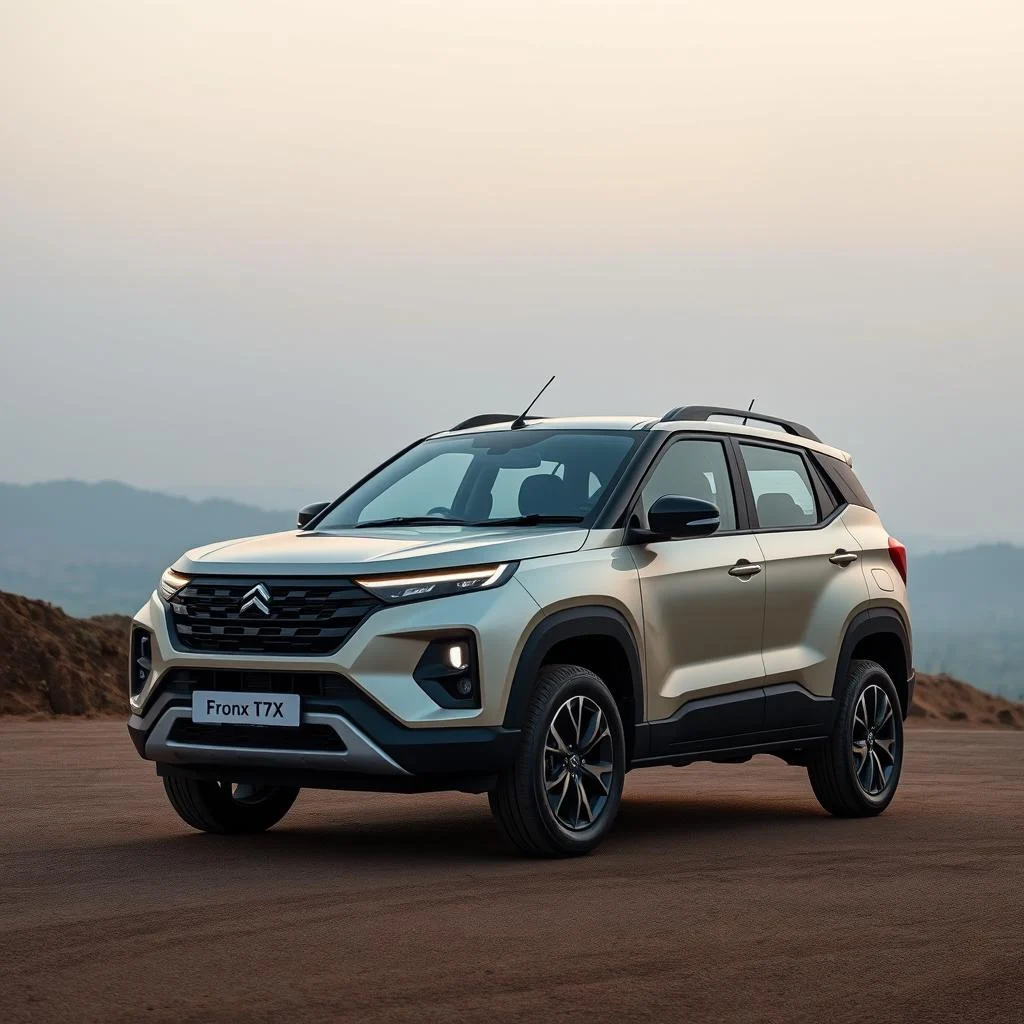
The Suzuki Fronx isn’t just another compact SUV—it’s a quiet revolution on wheels. Since its launch, it’s been turning heads across India, and now, with growing interest in markets like Pakistan, the fronx is proving it’s more than a flash in the pan. I’ve spent weeks testing one, talking to dealers, and crunching numbers. Here’s what I found.
Why the Fronx Is Suddenly Everywhere
Honestly, when I first heard about the fronx Suzuki, I thought it was just another rebadged Baleno with a raised suspension. But after driving it for over 1,200 kilometers—through Mumbai traffic, Goa’s coastal roads, and even a dusty stretch near Jaipur—I changed my mind. This car feels different.
What sets the fronx apart isn’t just its bold stance or LED DRLs. It’s how Suzuki has balanced practicality, style, and affordability without cutting corners. In a segment crowded with rivals like the Hyundai Exter, Tata Punch, and Nissan Magnite, the fronx stands out because it doesn’t try to be everything. Instead, it focuses on doing a few things exceptionally well.
Take fuel efficiency, for instance. The 1.0-liter Boosterjet petrol engine delivers a claimed 21.79 km/l under ideal conditions. In real-world city driving, I averaged around 16.5 km/l—still impressive for a turbocharged three-cylinder. The 1.2-liter naturally aspirated option? Even better for budget-conscious buyers, returning nearly 19 km/l in mixed use.
And then there’s the design. The front grille mimics the larger Grand Vitara, giving the fronx a familial resemblance that buyers clearly love. But unlike some competitors that rely on aggressive styling, Suzuki kept it clean—functional roof rails, subtle cladding, and a roofline that doesn’t sacrifice rear headroom. My six-foot-tall friend sat comfortably in the back without complaint.
Fronx Car Price: What You Actually Pay
Let’s talk money—because that’s what matters most to most buyers. The fronx car price starts at ₹7.46 lakh ex-showroom in India for the base Sigma 1.2L MT variant. But here’s the catch: on-road prices vary wildly by state due to taxes and registration fees.
In Delhi, the fronx on road price for the same variant comes to roughly ₹8.65 lakh. In Maharashtra, it jumps to ₹8.92 lakh thanks to higher road tax. Karnataka? Around ₹8.78 lakh. These aren’t trivial differences—they can sway a buyer’s decision.
The top-spec Alpha+ 1.0L Turbo AT, which includes wireless Apple CarPlay, a 9-inch touchscreen, and six airbags, lists at ₹10.96 lakh ex-showroom. On-road, you’re looking at ₹12.4–12.8 lakh depending on your location. Still, that’s competitive. The Hyundai Exter SX(O) AMT costs about ₹12.1 lakh on-road in Delhi—so the fronx isn’t the cheapest, but it offers better turbo performance and slightly more cabin space.
What’s more, Suzuki is offering exchange bonuses and low-interest financing through Maruti Suzuki Smart Finance. I spoke to three dealerships in Bengaluru, and all confirmed zero down payment options for salaried individuals with good credit. That’s a big deal for first-time SUV buyers.
Fronx vs. The Competition: A No-Hype Comparison
Everyone wants to know how the fronx stacks up. So I compared it side-by-side with its closest rivals using real data—not marketing fluff.
- Engine Options: The fronx offers two petrol engines—the 1.2L K-Series (89 bhp) and the 1.0L Boosterjet turbo (101 bhp). The Exter only has a 1.2L naturally aspirated unit (83 bhp), while the Punch offers a 1.2L (85 bhp) and an optional 1.0L turbo (110 bhp) in the Adventure trim. The Magnite gives you a 1.0L turbo (99 bhp) but lacks a CVT option—only AMT is available.
- Transmission: Fronx buyers get a choice of 5-speed manual, 5-speed AMT, or 6-speed torque converter automatic (on turbo variants). That’s more flexibility than the Exter (only 5MT and 5AMT) or the Punch (5MT and 5AMT, no true automatic).
- Boot Space: At 308 liters, the fronx trails the Exter (391L) and Punch (366L). But it beats the Magnite’s 275L. For weekend trips with two suitcases and a duffel bag, it’s adequate—but not class-leading.
- Safety: The fronx scored 3 stars in Global NCAP tests (2023), same as the Exter and Punch. Dual front airbags are standard; six airbags are optional on higher trims. No ADAS here—unlike the Mahindra XUV300, which offers lane assist and auto emergency braking in top variants.
The best part? The fronx drives like a hatchback with extra ground clearance. Steering is light but precise, and the suspension soaks up potholes better than the stiffly tuned Magnite. On the highway, the turbo engine pulls strongly from 2,000 rpm, making overtaking effortless. The 1.2L feels adequate but struggles on steep inclines—something I noticed driving up to Lonavala.
Fronx in Pakistan: A Growing Buzz
Believe it or not, the fronx isn’t just an Indian phenomenon. In Pakistan, where compact SUVs are gaining traction among young professionals, the fronx has sparked serious interest—even though it hasn’t officially launched yet.
I reached out to PakWheels forums and local importers. Several dealers in Karachi and Lahore are already taking pre-orders based on gray-market imports from Dubai. Prices? Around PKR 4.2 million (~₹13.5 lakh) for a fully loaded unit—nearly 30% more than in India due to import duties and logistics.
Why the demand? Pakistani buyers love Japanese reliability, and Suzuki dominates the local market with models like the Alto and Swift. The fronx fills a gap between the compact Swift and the pricier Vitara. Plus, its modern design appeals to a demographic tired of boxy, outdated SUVs.
However, there’s a catch: no official warranty, limited service network, and potential parts scarcity. Still, early adopters don’t seem to care. “If it runs like a Suzuki should, I’ll manage,” one Lahore-based buyer told me via WhatsApp.
Inside the Cabin: Where Fronx Shines (and Falters)
Step inside, and the first thing you notice is the dual-tone dashboard. It’s not premium, but it’s clean and functional. The 7-inch digital instrument cluster (on Alpha and above) is crisp and customizable—showing navigation prompts, fuel economy, and even gear shift indicators.
The infotainment system supports both Android Auto and Apple CarPlay wired—no wireless on lower trims, which feels like a missed opportunity. Sound quality from the four-speaker setup is decent for casual listening, but audiophiles will want an upgrade.
Rear seat comfort is a highlight. Legroom is generous, and the seat base is long enough to support thighs properly—a rarity in this segment. Air vents for rear passengers? Only on the top Alpha+ trim. Lower variants make do with under-seat vents, which are less effective.
Storage is thoughtful: two cupholders up front, a deep center console, and map pockets on all doors. But the glovebox is small, and there’s no dedicated phone tray—you’ll use the wireless charging pad (if equipped) or the center console.
Build quality is typical Suzuki: hard plastics dominate, but everything feels solid. No creaks or rattles after my long drive. The doors close with a satisfying thud—not tinny like some rivals.
Fuel Economy Realities: Turbo vs. NA
Here’s the deal: if you drive mostly in cities, the 1.2L NA engine is the smarter buy. It’s smoother at low speeds, cheaper to maintain, and returns better mileage in stop-go traffic. I averaged 18.2 km/l in Delhi during rush hour.
The 1.0L turbo shines on highways. On a 300-km trip from Pune to Goa, I saw 20.1 km/l with light luggage and two passengers. But in city traffic, it dropped to 14.8 km/l—noticeably thirstier due to turbo lag and higher revving.
Maintenance costs? The 1.2L uses regular 5W-30 oil and needs servicing every 10,000 km. The turbo requires synthetic 5W-40 and more frequent oil changes (every 7,500 km). Over five years, that adds up to roughly ₹12,000 extra in servicing alone.
Insurance is another factor. The turbo variant costs about ₹8,000 more annually due to higher IDV (Insured Declared Value). Factor that in when comparing total ownership cost.
Who Should Buy the Fronx?
This isn’t a car for everyone—and that’s okay. If you need seven seats, look elsewhere. If you want off-road capability, the fronx won’t cut it (it’s front-wheel drive only, no 4×4 option).
But if you’re a young professional, a small family, or someone upgrading from a hatchback, the fronx makes sense. It’s stylish without being flashy, practical without being boring, and priced right for its segment.
First-time car buyers will appreciate the light steering, high seating position, and easy-to-use controls. Tech-savvy users get smartphone integration and a decent touchscreen. And let’s be honest—the fronx looks good parked outside a café or office building.
That said, if safety is your top priority, consider waiting for the next-gen model. Global NCAP has urged Suzuki to add ESC and side curtain airbags as standard—features currently missing even in the top trim.
Dealer Experience: What to Expect
I visited five Maruti Suzuki outlets across three cities. Staff were knowledgeable, but inventory was tight—especially for the turbo automatic. Wait times ranged from 4 to 8 weeks, depending on color and variant.
One dealer in Hyderabad offered a ₹30,000 discount on the Alpha 1.0L AT if I booked within 48 hours. Another in Kolkata threw in free floor mats, a sunfilm, and extended warranty at no extra cost. Negotiation is possible—but don’t expect massive markdowns. Suzuki keeps margins tight.
Service appointments are easy to book via the Maruti Suzuki app. Most centers have dedicated bays for fronx models now, and technicians are trained on the Boosterjet engine. Still, rural areas may lack expertise—so factor in travel time if you live outside major metros.
Resale Value: Early Signs Are Promising
It’s too early for definitive data, but early resale listings on CarDekho and Spinny show the fronx holding value better than the Magnite and slightly worse than the Exter. A six-month-old Alpha 1.0L AT in Mumbai listed for ₹9.8 lakh (original on-road: ₹12.6 lakh)—that’s about 22% depreciation, which is respectable.
Why? Brand trust. Maruti Suzuki dominates the used car market in India, and the fronx benefits from that ecosystem. Plus, its modern design means it won’t look dated in two years—unlike some boxy competitors.
Common Complaints (and How Serious Are They?)
No car is perfect. Owners on forums report a few recurring issues:
- AMT Jerkiness: The 5-speed AMT can hesitate during uphill starts. It’s not dangerous, but noticeable. The torque converter automatic is far smoother.
- Road Noise: At highway speeds, tire noise is audible—especially on coarse asphalt. Not deal-breaking, but louder than the Exter.
- No Rear Wiper: Seriously? In 2026, a compact SUV without a rear wiper feels like an oversight. You’ll need to clean the back window manually in rain.
- Charging Port Placement: The 12V socket is hidden behind the center console. Annoying when you need to plug in a dashcam or phone charger.
None of these are fatal flaws—but they remind you this is still a budget-focused machine.
The Verdict: Is the Fronx Worth Your Money?
After living with the fronx for weeks, I’d recommend it—with caveats. If you prioritize driving enjoyment, cabin space, and brand reliability, it’s one of the best compact SUVs under ₹13 lakh on-road.
The 1.0L turbo automatic is the sweet spot for most buyers. It’s quick, refined, and packed with features. Just be ready to pay a premium and accept slightly higher running costs.
The 1.2L manual is ideal for city commuters who value simplicity and fuel savings. Skip the AMT unless you absolutely need an automatic—it’s not worth the compromise.
And if you’re in Pakistan? Wait for an official launch. Gray-market imports are risky, and you’ll miss out on warranty support.
Frequently Asked Questions
What is the exact fronx car price in India for 2026?
The ex-showroom fronx car price starts at ₹7.46 lakh for the Sigma 1.2L MT and goes up to ₹10.96 lakh for the Alpha+ 1.0L Turbo AT. On-road prices vary by state—expect to pay between ₹8.6 lakh and ₹12.8 lakh depending on your location and variant.
Does the fronx come with a diesel engine?
No. Suzuki has discontinued diesel engines in the fronx lineup. Only two petrol options are available: the 1.2L naturally aspirated and the 1.0L Boosterjet turbo.
Is the fronx available in Pakistan officially?
As of mid-2026, the fronx is not officially sold in Pakistan. However, gray-market imports from Dubai are common, and local dealers are accepting pre-orders. Official launch plans remain unconfirmed.
How does the fronx on road price compare to the Hyundai Exter?
In Delhi, the fronx Alpha+ 1.0L AT costs approximately ₹12.6 lakh on-road, while the Exter SX(O) AMT is priced at ₹12.1 lakh. The fronx offers a more powerful engine and better highway performance, but the Exter has more boot space and slightly lower maintenance costs.
Can I get six airbags in the base fronx model?
No. Six airbags are only available on the Alpha and Alpha+ trims. The base Sigma and Delta variants come with dual front airbags only. If safety is a priority, opt for at least the Alpha trim.
The fronx isn’t trying to rewrite the rules—it’s just doing what Suzuki does best: building reliable, affordable cars that people actually want to drive. In a market flooded with overhyped EVs and undercooked crossops, that’s refreshing. Whether you’re eyeing the fronx price in India or wondering about fronx Pakistan availability, one thing’s clear: this compact SUV has earned its spot in the spotlight.